Rev. William R. Pankey delivered his most memorable sermon on Sunday March 8, 1937. It was a cold late winter morning, but his message was on fire. The Baptist preacher had lots to work with: gambling, booze, and a new Mae West film (Klondike Annie). Whether by design or chance, Pankey’s words ended up being published in newspapers locally and around the nation.
Pankey had was in his fifth year preaching at Pittsburgh’s Union Baptist Church. It was a new church formed by the combination of two old congregations. The towering brick church was completed in the 1920s. Pankey came to Pittsburgh from Chester, Pa., when was called to serve in 1931.

Hornaday roads, Pittsburgh. Photo by David S. Rotenstein.
The preacher arrived in a city filled with bootleggers and gamblers. It was a bountiful field of sinners. By the mid-1930s, numbers gambling had infiltrated all corners of the city. There were numbers racketeers and corrupt politicians from city hall to corner markets. If Pittsburghers weren’t running numbers, they were betting on them.
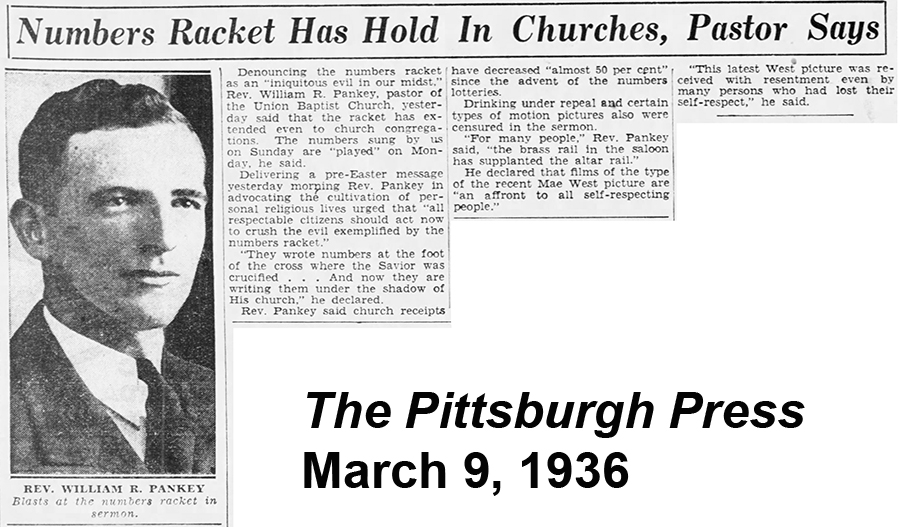
That Sunday in 1937, Pankey ascended the pulpit and railed about bookies siphoning change from church collection plates. Pankey said that collections were down about 50 percent “since the advent of the numbers lotteries.”
“Drinking under repeal and certain types of motion pictures also were censured in the sermon,” wrote the Pittsburgh Press.
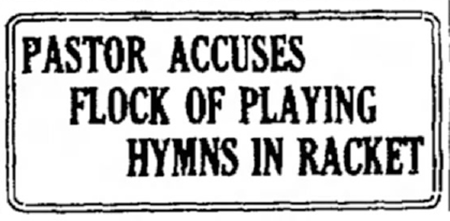
Perhaps the biggest headline grabber was Pankey’s accusation that members of his flock were using services as a source hunch numbers to play. “Hymn numbers used in the Sunday services,” wrote the Post-Gazette, “are played on Monday.”
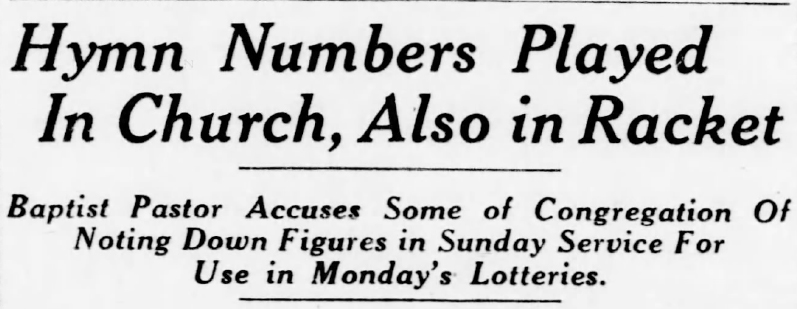
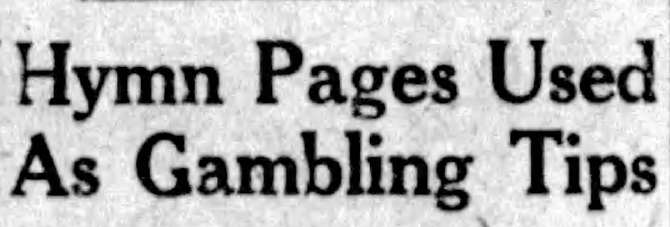
March 27, 1936.
Ever since numbers first appeared in cities around the turn of the 20th century, gamblers have drawn inspiration for their three-digit bets from all sorts of sources. Dates. Addresses. Digits in license plates and on signs. Dream books. Even the daily comics provided bettors with their numbers to play.
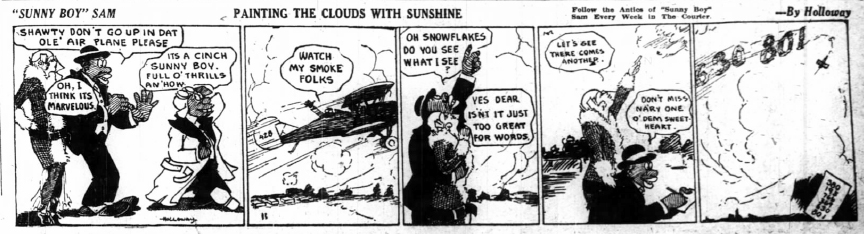
hallmarks were the many three-digit numbers that appeared in its frames.
The Pittsburgh Courier, March 29, 1930.
The headlines and hubbub died down by the end of March 1936. Pankey remained in Pittsburgh until 1941 when he moved to St. Louis, Mo. From there, he returned to his home state, Virginia. He had graduated from the University of Richmond. After graduating from the Crozier Theological Seminary in Upland, Pa., Pankey was ordained in 1924.
Pankey, born in 1902, had a long and distinguished career. In 1939, he published a history of the Baptist churches in Pittsburgh. After leaving the city, he returned several times to preach at Union Baptist Church. While based in Virginia, he also preached at other churches throughout the nation. He also taught and became an elder evangelical scholar. He died in 1983 at age 80.
©2023 D.S. Rotenstein
 COVert NKY