The first Sunday in May, the Residents of MainStrasse Association (ROMA) volunteers, capped off two months of work beautifying an alley in their Covington neighborhood. The unnamed alley parallels Main Street behind a row of homes and stores between West 7th and 8th streets. Leading up to the party, volunteers cleared trash, pulled weeds, ground stumps, and power washed the brick-paved alley.
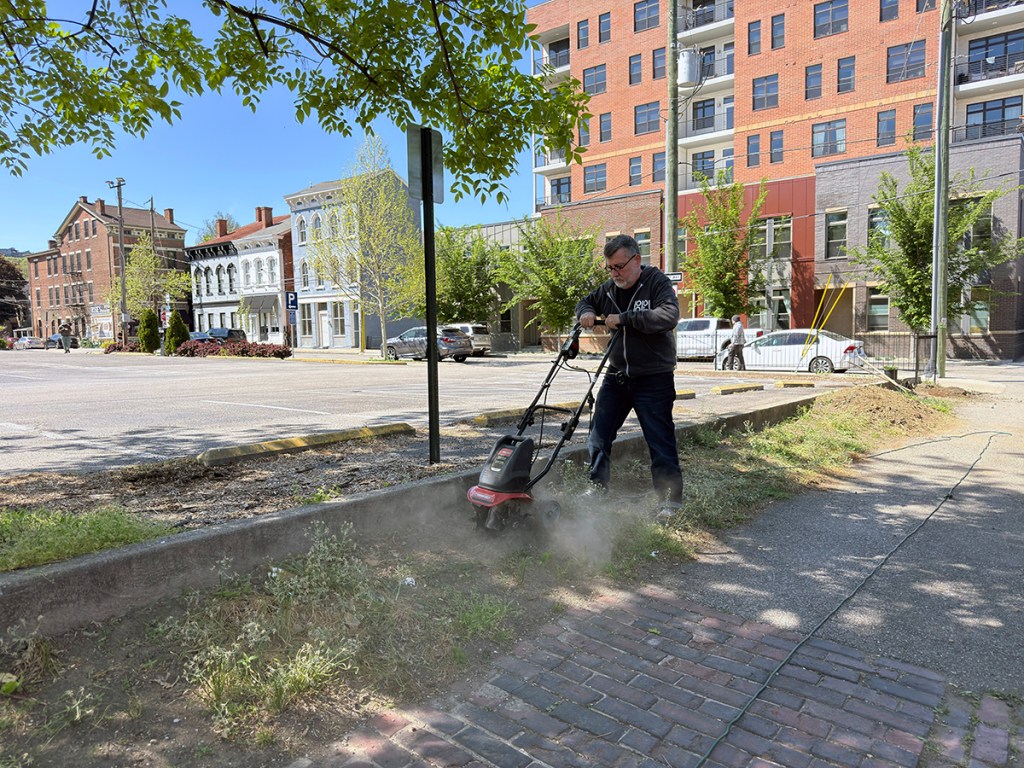
ROMA president William Dickson operates a tiller to prepare a strip adjacent to brick pavers for planting. Photo by David Rotenstein.
Once all of the debris was gone, new planters and mulch arrived to provide a place for flowers. A blank wall became a palette for a new mural and neighborhood children added another mural to a segment of wood fence.
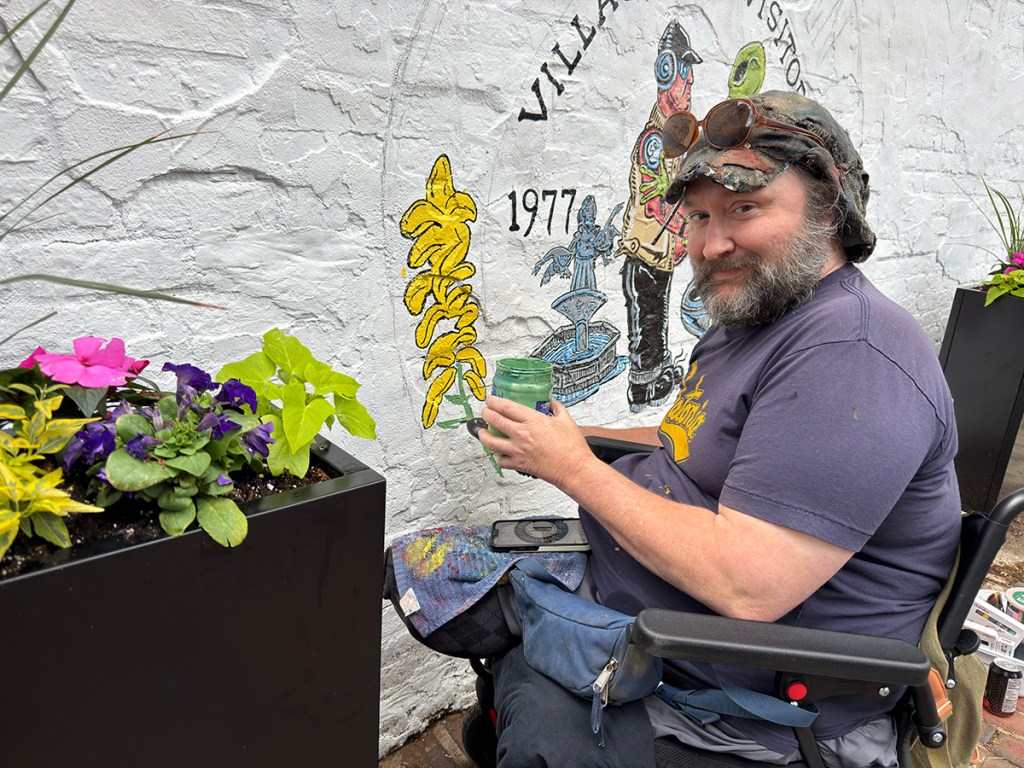
Resident MainStrasse artist Bret Schulte at work on the mural he painted in the alley. Photo by David Rotenstein.
Almost 400 people came out Sun. May 3 to hear live music by MainStrasse musicians, enjoy food donated by local businesses, and take in the transformed alley. A $5,000 municipal grant funded the work and the party to highlight the neighborhood and the city’s historic alleys.
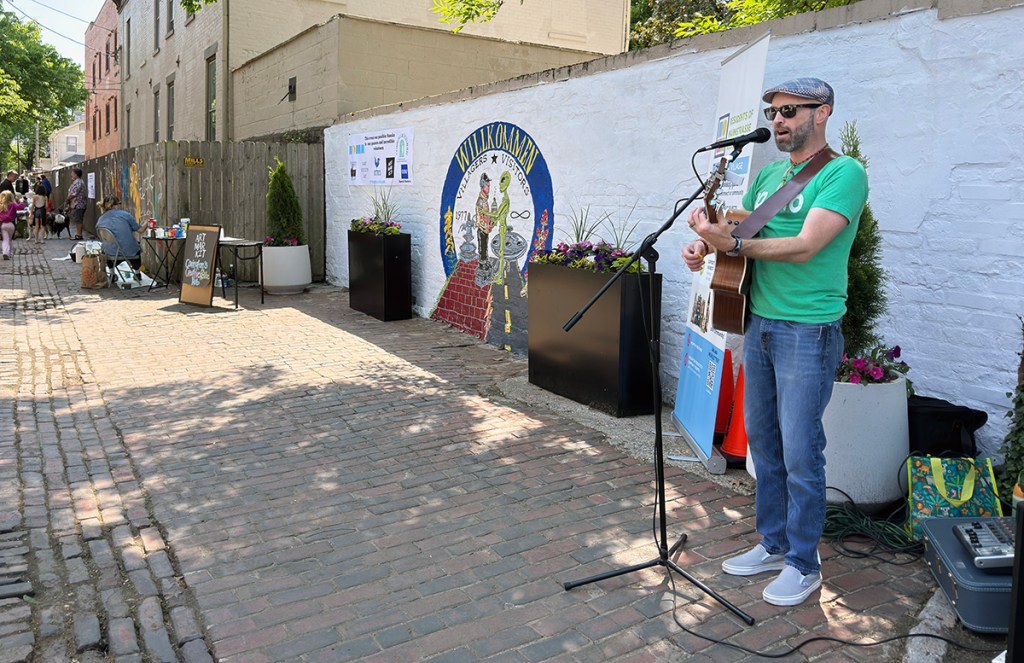
Musician Kyle Knapp is a fixture in MainStrasse pubs. Here he’s performing May 3 during the alley party. Also visible are the completed Bret Schulte mural, new planters, and children painting a wood fence. Photo by David Rotenstein.
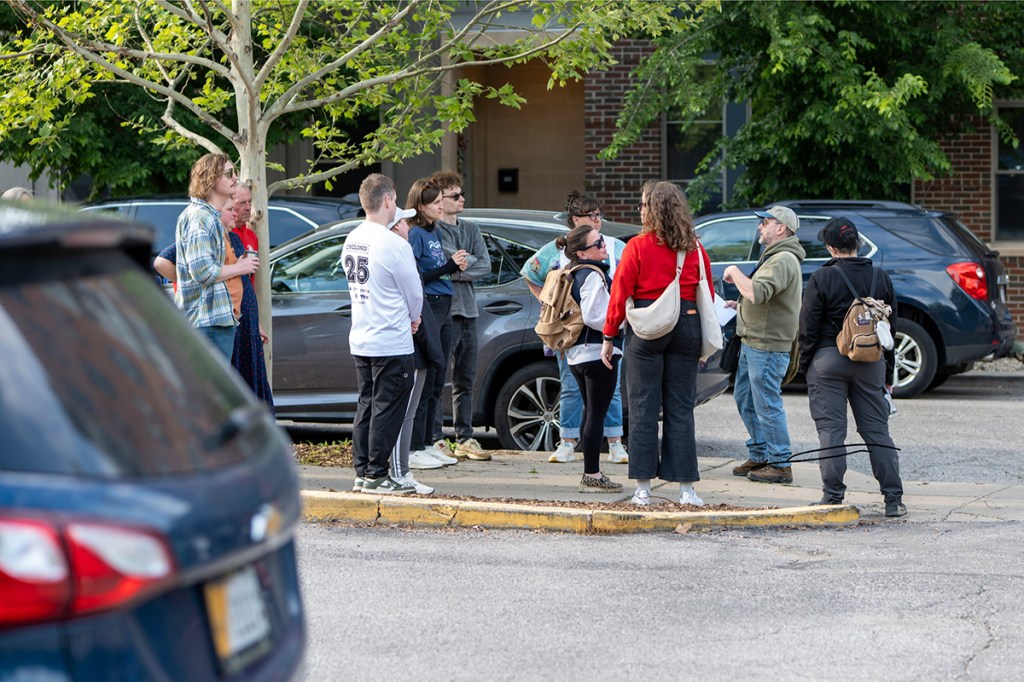
COVertNKY offered two mini-vice-stroll walking tours showcasing the neighborhood’s ties to bootlegging and gambling history.
Dr. David Rotenstein leads one of the mini-vice-stroll walking tours. Photo by Brendon Yancy.
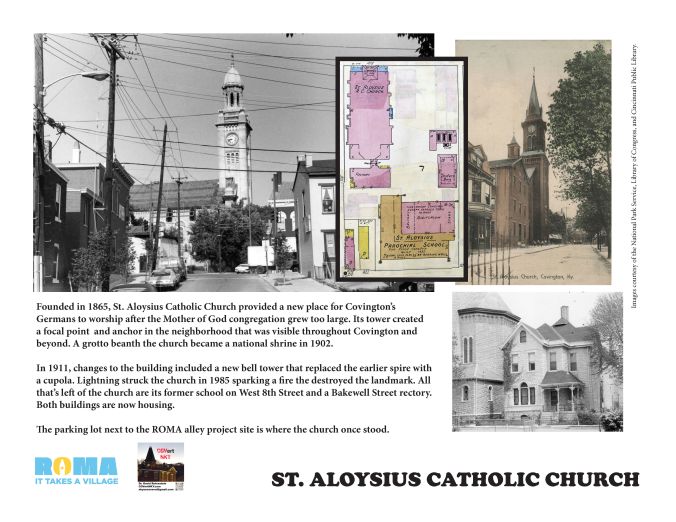
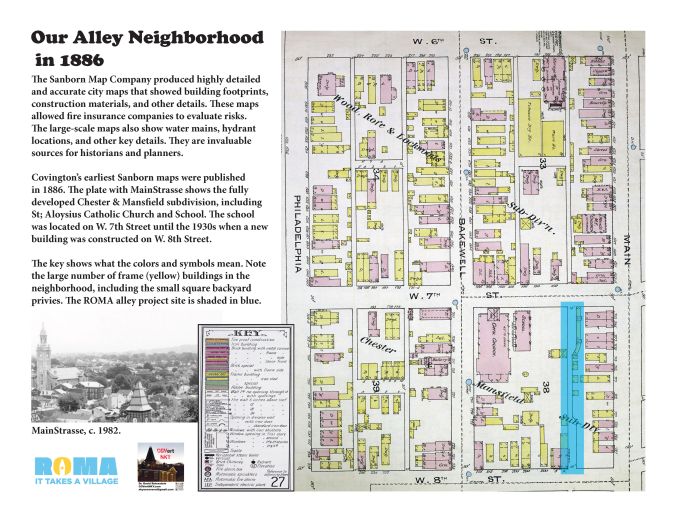
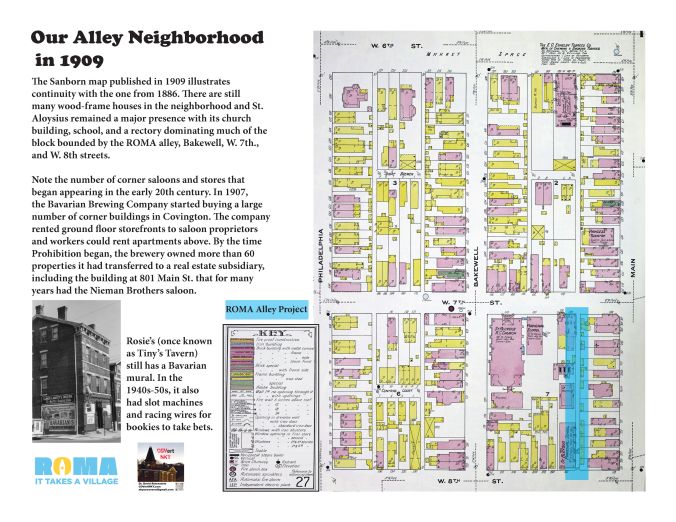
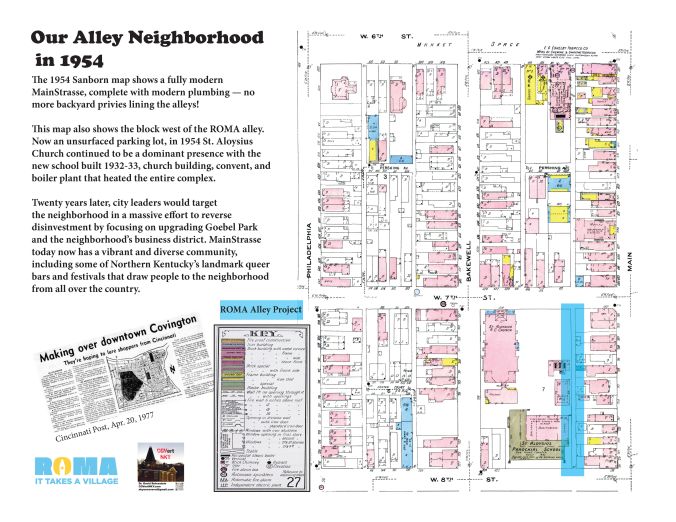
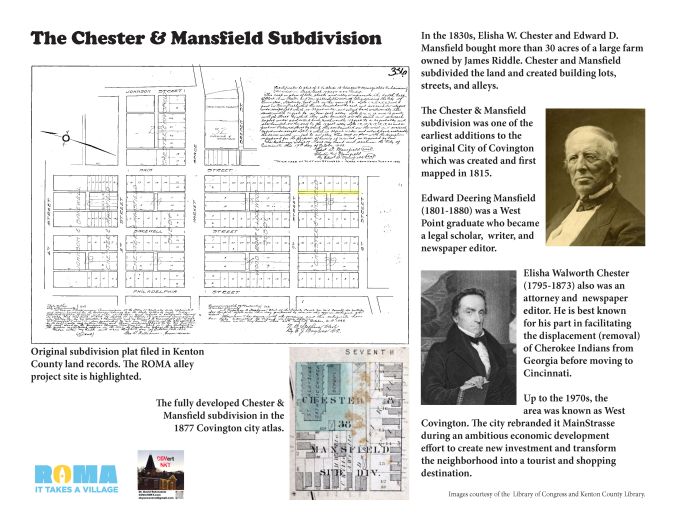
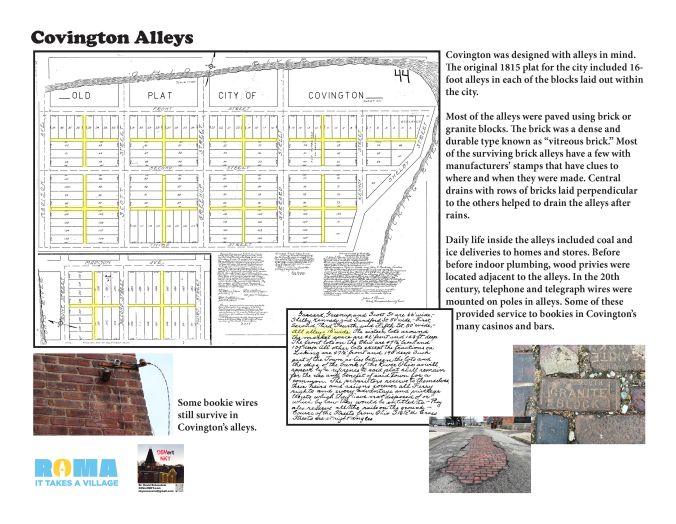
We also produced and installed a pop-up museum that documented the alley and neighborhood’s history. The six panels included historic photos and maps that illustrated such topics as a neighboring church that burned in 1985, the history of the subdivision where the alley is located, an overview of Covington alley history, and a series of historical points in time illustrated by Sanborn fire insurance maps.
Covington has some spectacular historic architecture. There’s lots to choose from for fans of Victorian houses, stylish commercial buildings, and historic cemeteries. Plus, there’s a John A. Roebling suspension bridge spanning the Ohio River. But it’s the city’s alleys that many architectural historians, preservationists, and urban planners find alluring. Once hidden and utilitarian, Covington’s ancient alleys are becoming relevant as new generations of residents and planners discover them.
“They have a certain aesthetic appeal,” said planner Christian Huelsman, founder of Cincinnati’s Spring in Our Steps, about Covington’s alleys. “They’re certainly appealing from a transportation perspective because they provide an alternative that’s away from busy streets.”
Covington is one of many American and Canadian cities where founders designed transportation grids with streets and alleys. They are found in Philadelphia, Pittsburgh, Cincinnati, and Toronto — all 18th century cities with alleys delineated in their original plans.
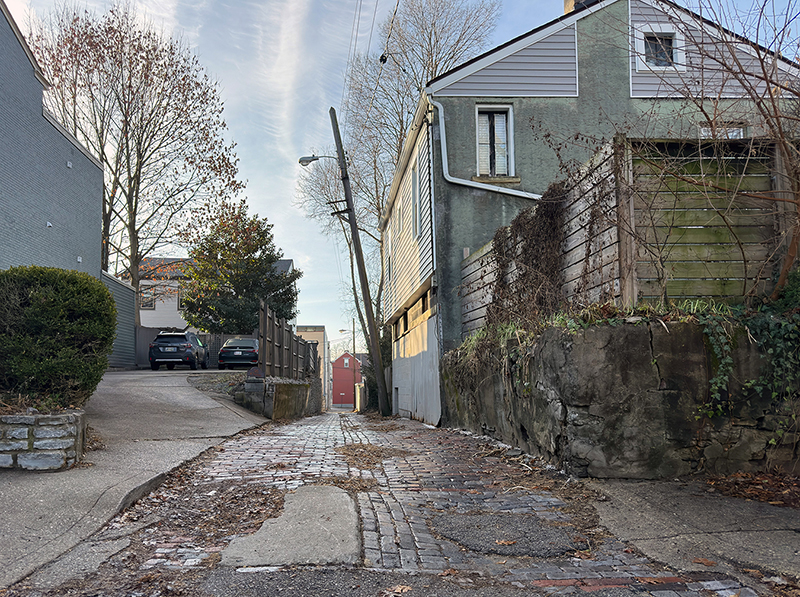
Many Covington alleys still have original brick pavements and drains. Photo by David Rotenstein.
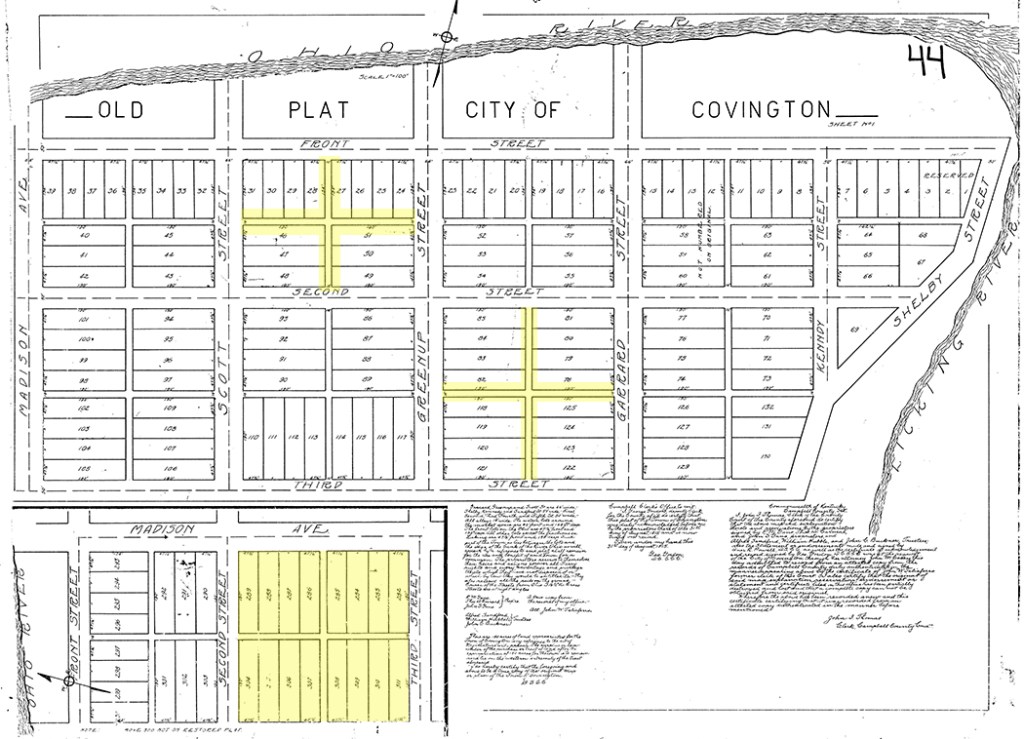
Founded in 1815, Covington’s original plan included streets that were 66- and 50-feet wide and blocks divided by 16-foot alleys. They were the spaces where privies were hidden and where coal and ice were delivered to homes and businesses.
Original 1815 plat of Covington showing street grid and planned alleys (examples highlighted). Kenton County land records.
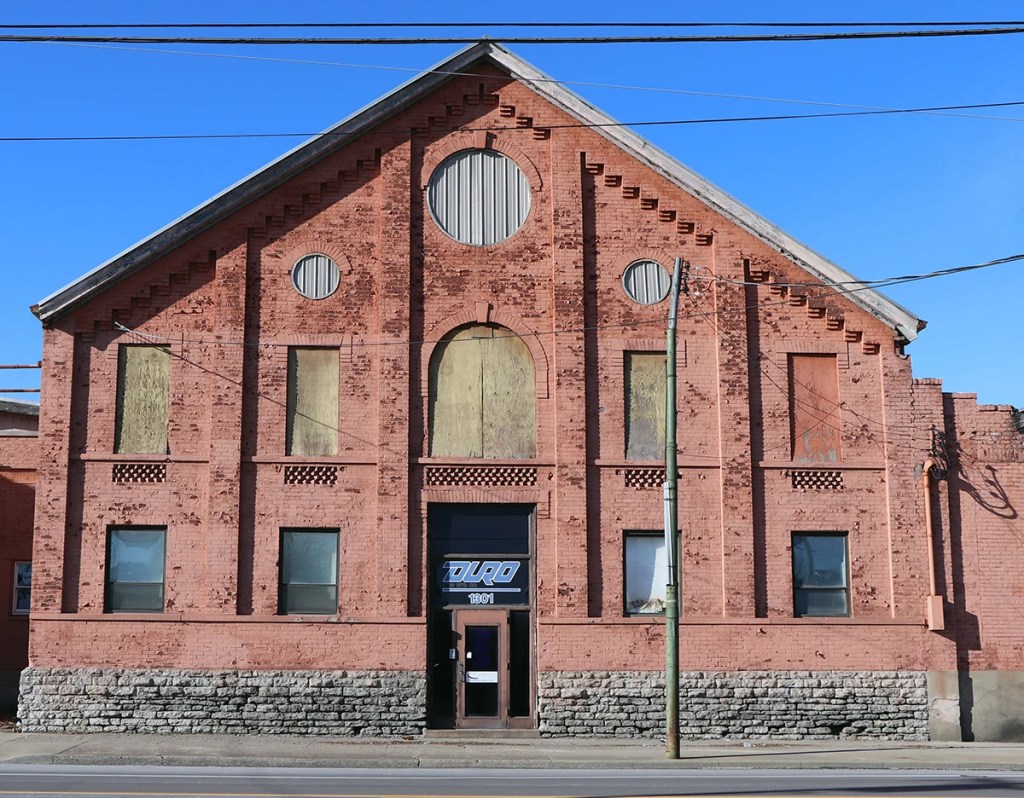
Former Duro bag site, 2026. Photo by David S. Rotenstein.
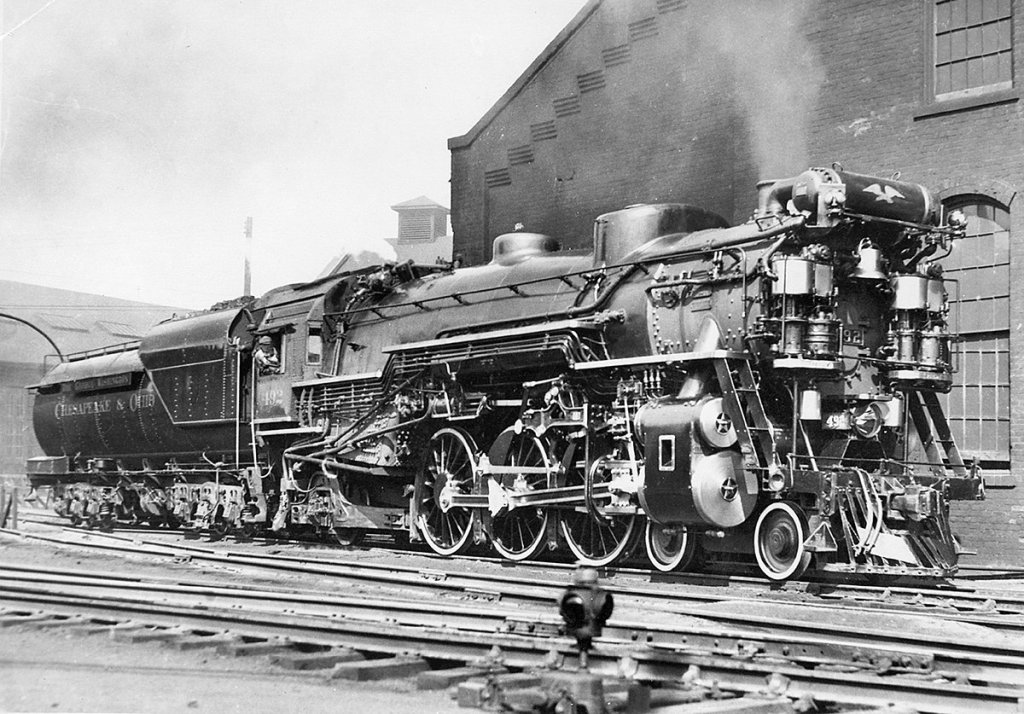
Earlier this year, the City of Covington, Kentucky, announced that a long-derelict industrial site would be making a comeback. The city, along with the Northern Kentucky Port Authority and Kenton County, announced plans for a former C&O Railroad roundhouse that had been used for more than half a century as a paper bag manufacturing plant. Hidden beneath the industrial patina are more than 150 years of industrial history.
First used in the mid-19th century as a railroad repair facility and offices, the site became a production facility for one of the nation’s biggest shopping bag manufacturers. It also became the setting for prolonged labor disputes before ending up an abandoned relic filled with stories and toxic substances accumulated throughout its history.
The Railroad Years
In the 1850s, Covington became the northern terminus for the Covington and Lexington Railroad. Ninety-nine miles of track connected Lexington to Covington by the time the route was completed in 1854.
C&O Railroad engine parked on tracks outside of the Covington roundhouse. Photo courtesy of Chesapeake & Ohio Historical Society.
Passengers and freight not remaining in the city crossed the Ohio River into Cincinnati — originally by ferry and after 1867, via John Roebling’s suspension bridge and later railroad bridges.
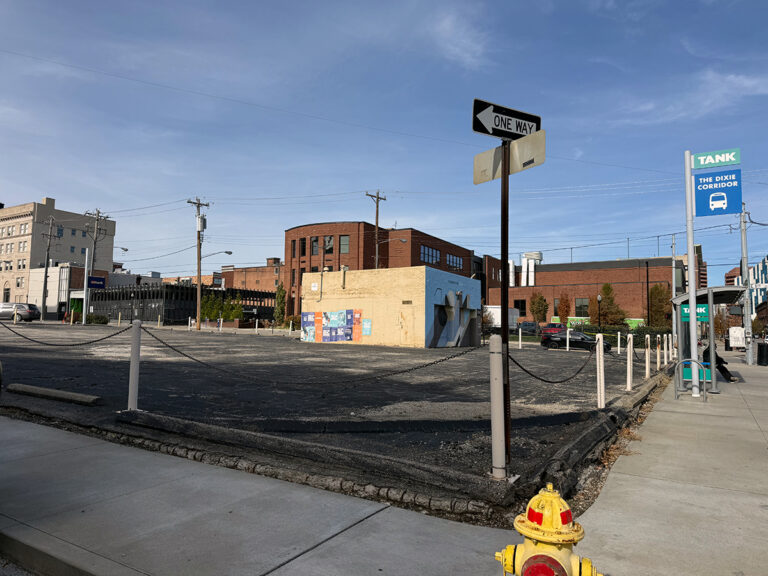
There is a flooded parking garage beneath this surface parking lot at the intersection of Scott and Pike streets in Covington. The Pure Oil Company built the concrete block service station in 1941. Photo by David Rotenstein.
Each fall, Jill Morenz leads two-hour walking tours of downtown Covington, Kentucky, highlighting some of the city’s best- and least-known ghost stories. As she walks by the surface parking lot at the intersection of Pike and Scott streets, she casually mentions that the property — prime downtown real estate — has been vacant for a long time, partly because of a hidden and flooded space beneath the asphalt.
“There’s tunnels under there,” Morenz said in an interview after one of her 2025 tours. “You just walk across the parking lot and you’re like, oh, I wonder why nobody’s put anything here.”
The parking lot fits well into Morenz’s tour: it’s haunted by the ghosts of an old brewery and a failed hotel project.
She recalled when she first learned about some of the property’s history. Morenz, who now runs Aviatra Accelerators, was working for the Catalytic Fund. The lender, in turn, was working with a developer who wanted to build a condominium building on the site and there was one big stumbling block.
“[They] couldn’t get approval, and then it suddenly became clear why, because it’s just not stable enough to support anything big on there,” Morenz explained.
Morenz and others familiar with the site and its history of abandoned development bids tend to chalk up its longevity as dead space to the flooded cavern beneath the parking lot and the costs involved to deal with it.
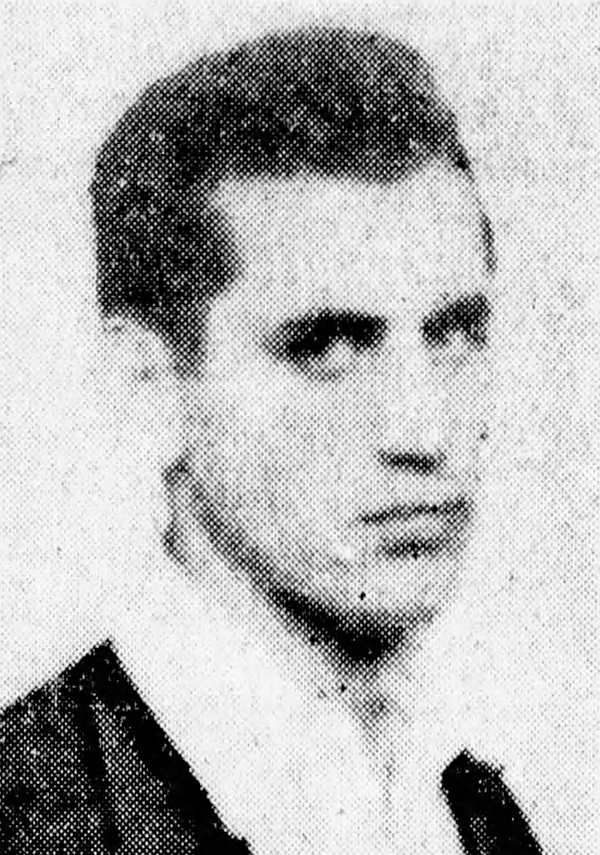
Aaron Meyerowitz. The Kentucky Post, Feb. 23, 1946. Via newspapers.com.
Aaron Meyerowitz, a.k.a., Danny Meyers, came to Newport, Kentucky, from Kansas City, Missouri, in 1945. He found work in casinos run by Jewish racketeers from Cleveland and New York who had muscled into Northern Kentucky’s vice economy. Meyerowitz blasted his way into Northern Kentucky mob history in 1946 when he took a job delivering payback for an ill-conceived Newport casino robbery.
Instead of getting a big payday for killing one of the robbers and wounding two other people, Meyerowitz ended up becoming a loose end and a liability. He made a run for Pittsburgh. There, within a day, another hitman tracked him down and took Meyerowitz for a ride. A man on his way to work found Meyerowitz’s body inside a parked car in a popular Pittsburgh park.
Meyerowitz’s brief life of crime is documented in a story published over at Cincy Jewfolk.
Roadhouse owner Joe Stevie. Courtesy Bob and Joe Stevie.
Covington, Kentucky, may be one of the few places in the country where an ordinary conversation about a vacant downtown parking lot seamlessly segues into a discussion about bootlegging and gambling. That’s what happened earlier this year when developer Joe Stevie was describing the history of a lot at the corner of Scott and Pike streets.
“My great-great-uncle Joe owned a place called Stevie’s Roadhouse,” Stevie said in a January interview in his Covington office. “It was across the street from the Greyhound Grill in Fort Mitchell.”
Then Stevie’s story got really interesting. “So Joseph Stevie was shot by people coming to rob him. He was shot in his stomach [and] survived,” the contemporary Joe Stevie said.
Northern Kentucky’s Long History of Roadhouses
Stevie’s roadhouse was one of many roadhouses that sprang up around Covington and Newport in the years bracketing the turn of the 20th century. Located along highways leading into the cities, roadhouses began as places where travelers could find lodging, food, intoxicating beverages and maybe some entertainment.
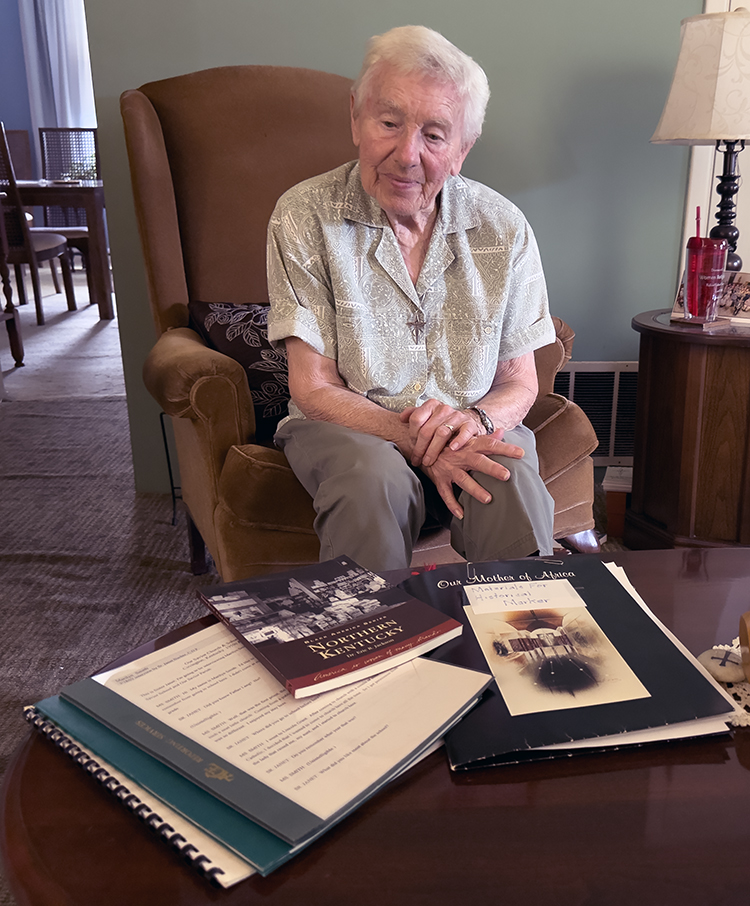
Sister Janet Bucher, July 2025. Photo by David Rotenstein.
Sister Janet Bucher was one of the first people I met after moving to Covington, Kentucky, last summer. Before the move, I had subscribed to City of Covington email lists promoting future events in our new home. A historical marker dedication caught my eye.
I attended the event at Covington’s Church of Our Savior and quickly switched from new resident mode into journalist and historian mode. During the event, I shot photos and interviewed key participants, including the powerhouse who initiated the marker project: Sister Janet Bucher. Later that day, I pitched a story to a local newsroom and it came out a few weeks later.
After Sister Janet retired, I wrote about her life and career in a second article.
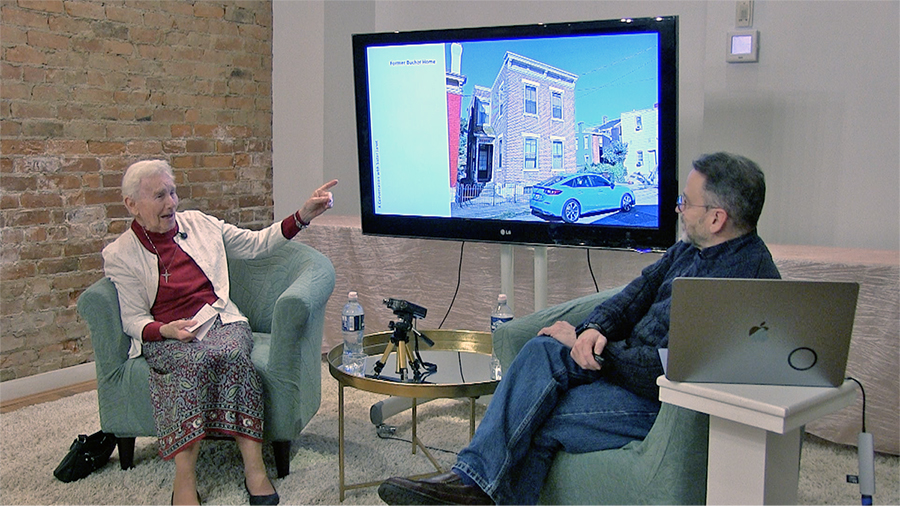
More interviews followed and it quickly became apparent that Sister Janet’s story is an important part of Covington’s history. I wanted to share the experiences beyond the printed page and I conceived a program that involved me interviewing Sister Janet before a live audience. The program took place Jan. 8 and it included the live interview, a brief slide show that illustrated her life in Covington and her career, and a discussion with the audience.
A Conversation with Sister Janet, Jan. 8, 2026.
The program is available on YouTube. Additional copies will be donated to the Kenton County Public Library’s Local History & Genealogy Department.
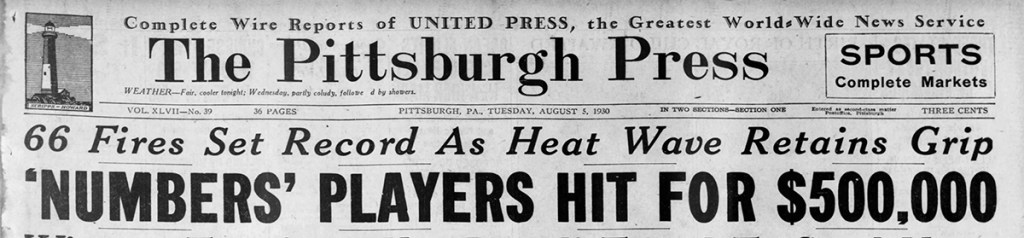
I don’t think I had ever heard of Covington and Newport until the fall of 2019. That’s when I began digging into the story behind one of Pittsburgh’s most memorable episodes in organized crime history. On August 5, 1930, it seemed like everyone placing a numbers bet in the Steel City picked 805 as their number.
Pittsburgh Press front page, August 5, 1930.
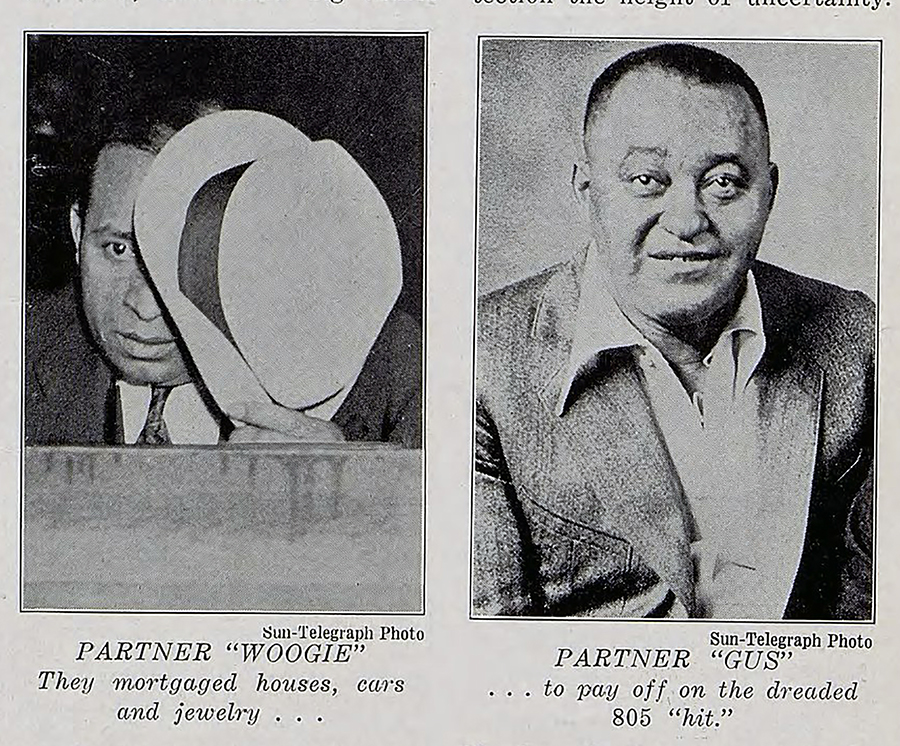
The resulting rush by numbers bankers to pay winners or get out of town because they couldn’t pay became entrenched in Pittsburgh’s true crime lore. It made legends of some numbers bankers who paid, like Gus Greenlee and Woogie Harris, and scoundrels out of others who didn’t, like Jake Lerner.
Pittsburgh Bulletin Index, Feb. 20, 1936.
Lerner’s name was a latecomer to the 805 story. In 1981, University of Pittsburgh history graduate student Rob Ruck interviewed an aging racketeer about the 805 episode.
Pittsburgh Post-Gazette, Aug. 15, 1963.
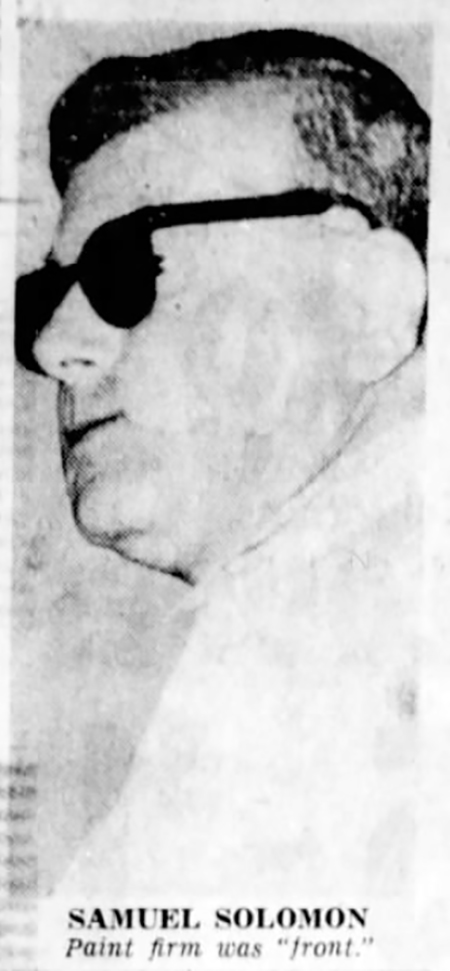
“Did you ever hear of a number 805,” Ruck asked Sam Solomon.
Instead of directly answering Ruck’s question, Solomon replied with a rhyme: “805 was a burner. Where the hell is Jakie Lerner?”
Solomon’s quotation appeared in Ruck’s 1983 PhD dissertation and 1993 book, Sandlot Seasons: Sport in Black Pittsburgh. Since then, it’s been widely quoted.
Ruck moved on in the interview with Solomon and didn’t ask two key follow-up questions: Who was Jakie Lerner and why as Lerner important in the 805 story?
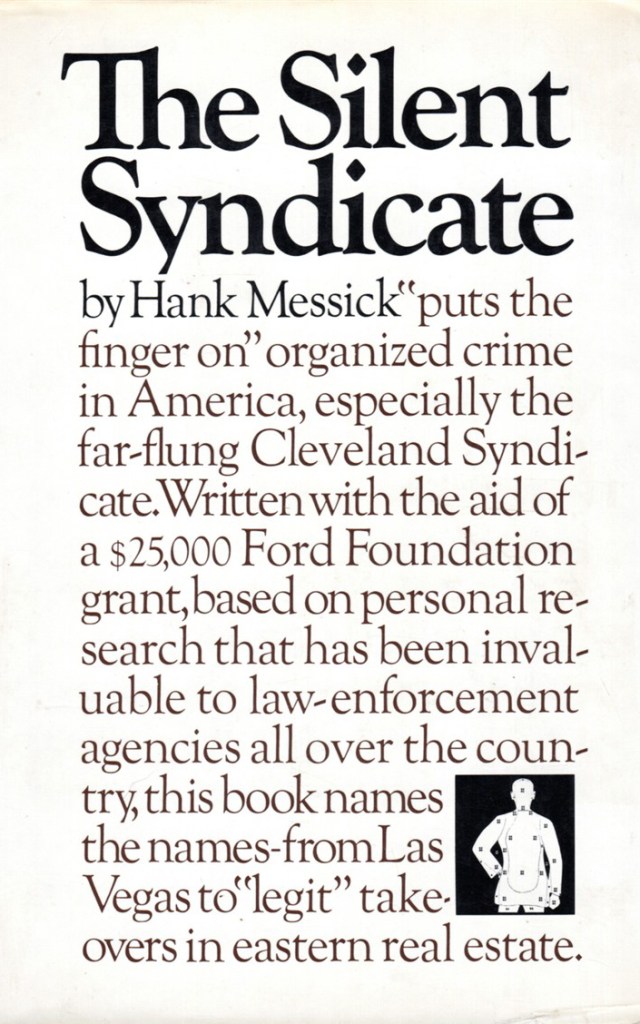
I went looking for Lerner’s story and found part of it in journalist Hank Messick’s 1967 book about Cleveland organized crime history, The Silent Syndicate. In the book, Messick told the story of Cleveland racketeers who transformed Northern Kentucky into a gambling mecca.
Messick made a career out of the Cleveland syndicate and their activities, from Northern Kentucky to Southern Florida and Las Vegas.
By 1950, Covington and Newport had joined Hot Springs, Arkansas, and a handful of other American small cities where gambling, bootlegging, and prostitution comprised the biggest slice of the local economic pie.
Messick’s Silent Syndicate came up among the top results in my first internet searches using Jake Lerner’s name.
Messick had tied Lerner, who started his crime career in Pittsburgh in the 1920s, to Tucson-based gambling via wire services. Sam “Gameboy” Miller was Lerner’s connection to Northern Kentucky. In the 1930s, Miller had been dispatched by the Cleveland syndicate to run the Lookout House casino which was located just outside of Covington.
Lerner had settled down in Tucson in 1943 to run a numbers gambling and money laundering operation for Pittsburgh racketeers. The FBI wrote in 1945 that Pittsburgh racketeers had stopped going to Hot Springs and instead were visiting Lerner’s Tucson ranch.
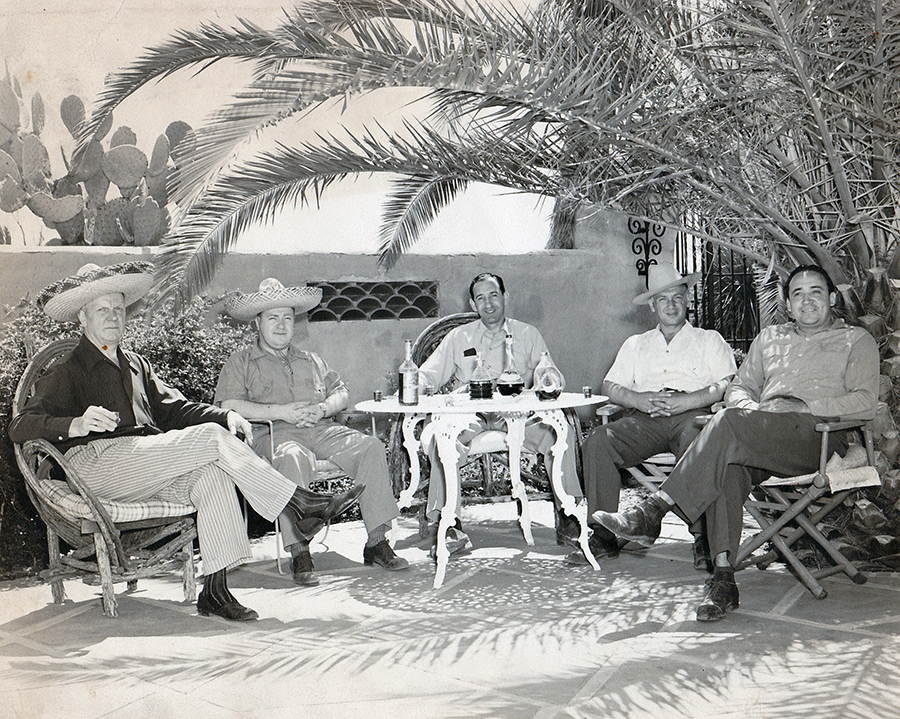
Jake Lerner (second from right) and friends at his Tucson ranch in the late 1940s.
“Gameboy made his headquarters at the Santa Rita Hotel in Tucson. Assisting him was Jacob Lerner of Pittsburgh,” Messick wrote in Silent Syndicate. “Lerner had been associated with the syndicate in a dog track at Steubenville, Ohio, and he fronted for Miller in Tucson.”
I bought a copy of Silent Syndicate and most of Messick’s other books about organized crime. My first article about Lerner and gambling appeared in a Pittsburgh magazine in 2020. By June of 2021, I was leading organized crime history walking tours in Pittsburgh.
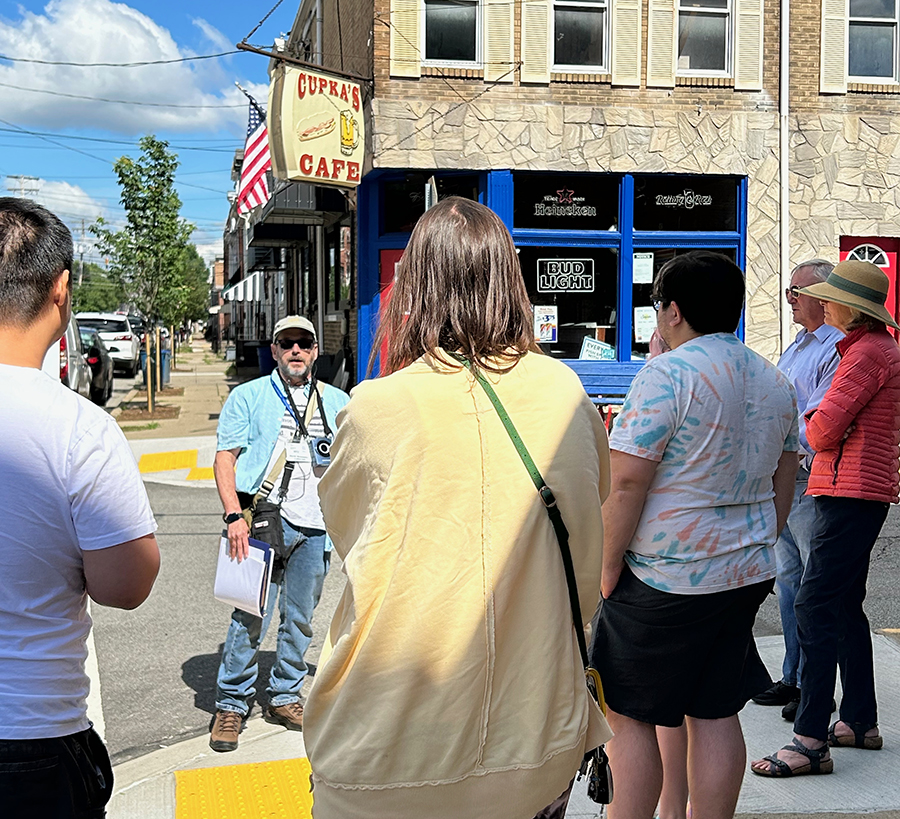
South Side by the Numbers walking tour, Pittsburgh 2024.
Curious about Northern Kentucky’s rackets history, in 2024 I booked a spot on one of Newport’s popular gangster tours. It didn’t take long for me to fall in love with the region. Less than a year later, we moved from Pittsburgh to Covington, swapping one Ohio River city for another.
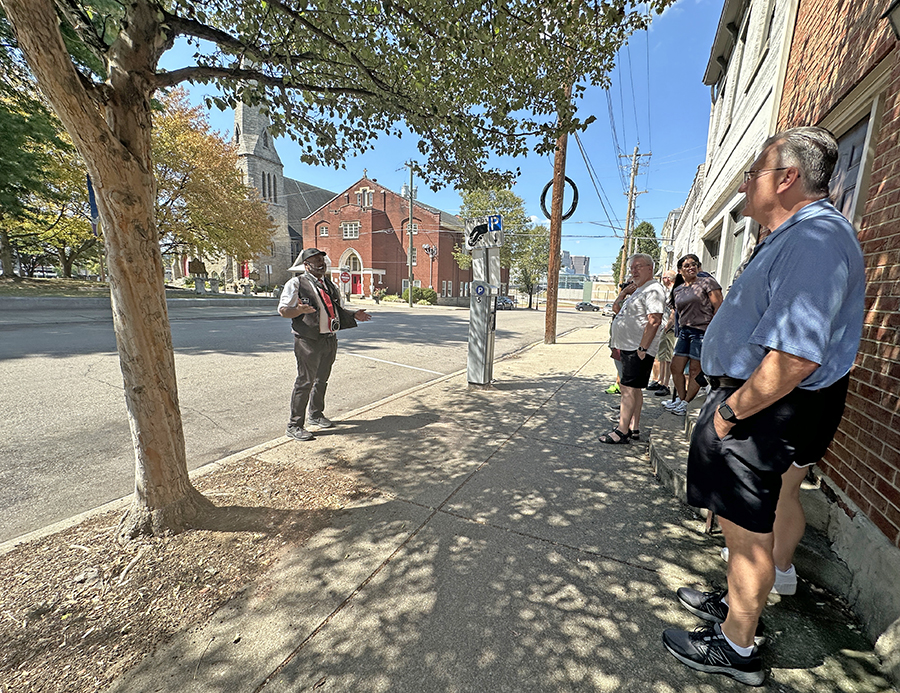
Newport gangster tour, Sept. 2024.
COVertNKY is Steel City Vice rebranded. Follow us on Bluesky, YouTube, and here for new stories about lots of Northern Kentucky and Cincinnati topics, including, of course, organized crime. Sign up for email announcements for Covington walking and bike tours starting in the Spring of 2026 [coming soon].
As you get to know COVertNKY, you can either blame or thank Hank Messick for its arrival.
For much of the twentieth century, numbers gambling defined much of the Hill District’s economic and social landscapes. The street lottery immortalized in August Wilson’s plays and Hill District oral traditions arrived in Pittsburgh in the early 1920s. Within a decade it had spread from Hill District barber shops, pool halls, and newsstands to every corner of the city. It spawned legends and it financed the rise of the city’s rich entertainment and sports industries.
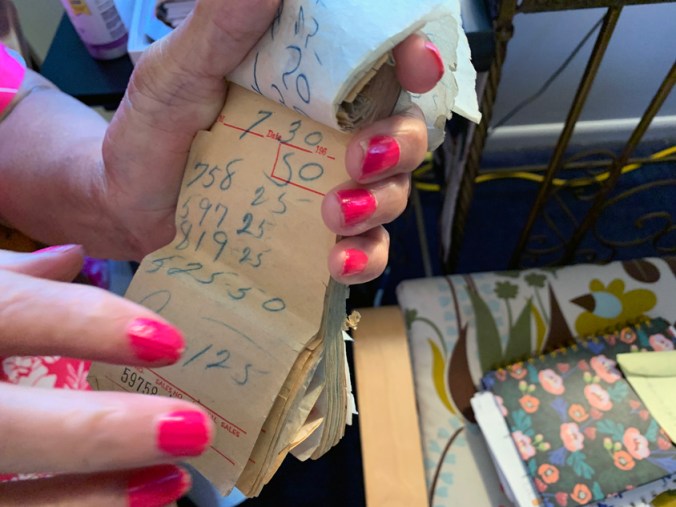
Numbers book used in the Hill District during the early 1960s.
Informal lotteries thrived in Black communities since at least the 1860s. The most popular, known as policy, evolved from betting on the outcomes of official state lotteries. Later gambling entrepreneurs opened betting parlors where people could bet on combinations of digits on buttons or balls drawn from burlap bags and wire cages. Pittsburgh newspapers began reporting on policy rings here during the 1870s.
Policy, however, was easy to rig and cheating was rampant. Thus, Harlem numbers racketeers developed a system for calculating the number that players believed was incorruptible, i.e., it couldn’t be fixed like earlier street lotteries. Instead of being drawn from a container, the daily number was based on a known figure published in the financial pages of daily newspapers – popular choices included the volume of shares traded on the New York Stock Exchange, or the daily balance of the U.S. Treasury. Bettors played the game by simply selecting a three-digit number and paying a penny, nickel, or dime to a bookie called a “runner” who recorded the the number on a slip of paper. Because the daily number was unpredictable and publicly-known, consumer confidence and participation soared.
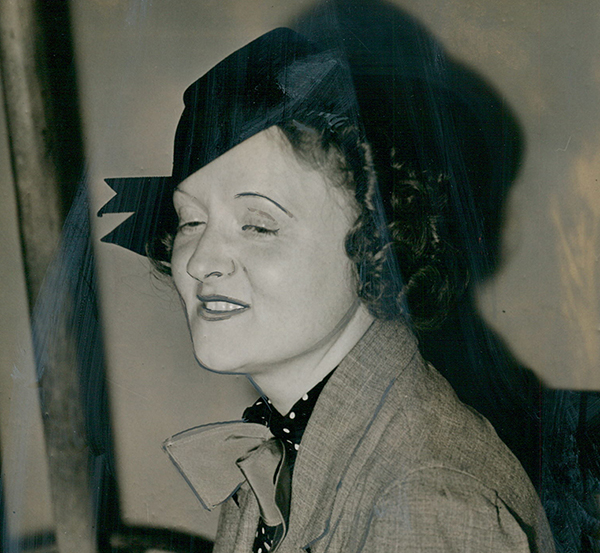
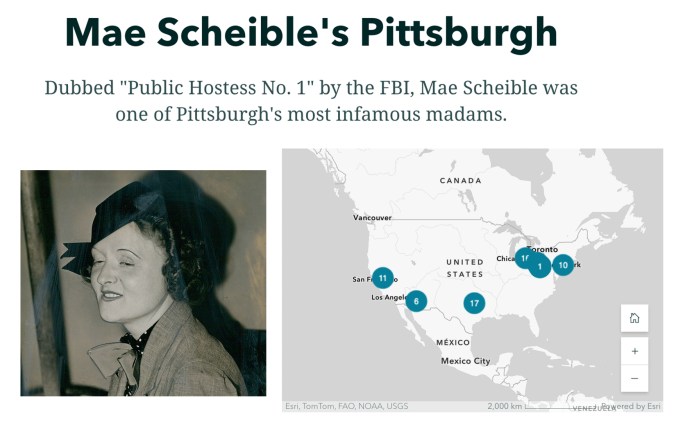
While researching a feature story on the history of brothels and sex work in Pittsburgh, I tried to wrap my head around Mae Scheible’s incredible story. Her name appears in several overviews of vice history in Pittsburgh. Yet, her story (and place in local and national history) has been eclipsed by legends attached to another well-known Pittsburgh madam, Nettie Gordon.
As I dug deeper into Scheible’s story, I realized there was a lot more to her than the existing published record. Researching someone like Scheible is a challenge: to say that she had a fraught relationship with the truth would be an understatement.
The article about brothels appeared in NEXTpittsburgh on August 29, 2024. While working on the article, I began building a storymap to better illustrate Scheible’s long career and colorful life. The storymap’s first draft is now live. It’s going to take some more time to follow additional leads and update it (and likely correct it) with new information as I collect it from remote locations throughout the United States.