How numbers gambling took root in Pittsburgh’s Hill District

For much of the twentieth century, numbers gambling defined much of the Hill District’s economic and social landscapes. The street lottery immortalized in August Wilson’s plays and Hill District oral traditions arrived in Pittsburgh in the early 1920s. Within a decade it had spread from Hill District barber shops, pool halls, and newsstands to every corner of the city. It spawned legends and it financed the rise of the city’s rich entertainment and sports industries.
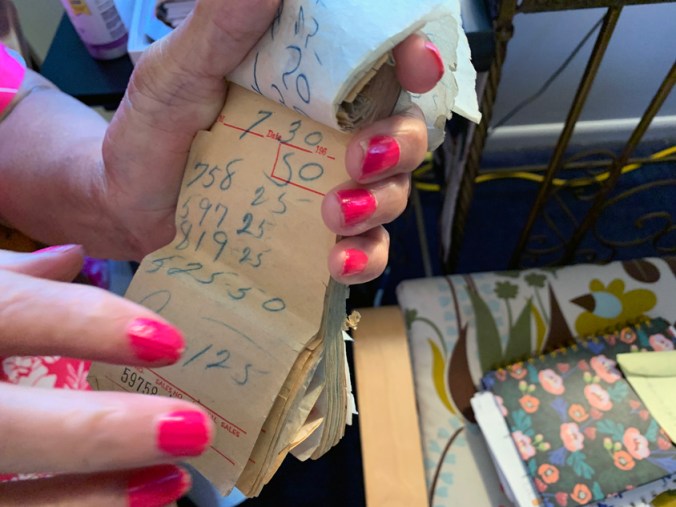
Numbers book used in the Hill District during the early 1960s.

Informal lotteries thrived in Black communities since at least the 1860s. The most popular, known as policy,  evolved from betting on the outcomes of official state lotteries. Later gambling entrepreneurs opened betting parlors where people could bet on combinations of digits on buttons or balls drawn from burlap bags and wire cages. Pittsburgh newspapers began reporting on policy rings here during the 1870s.

Policy, however, was easy to rig and cheating was rampant. Thus, Harlem numbers racketeers developed a system for calculating the number that players believed was incorruptible, i.e., it couldn’t be fixed like earlier street lotteries. Instead of being drawn from a container, the daily number was based on a known figure published in the financial pages of daily newspapers – popular choices included the volume of shares traded on the New York Stock Exchange, or the daily balance of the U.S. Treasury. Bettors played the game by simply selecting a three-digit number and paying a penny, nickel, or dime to a bookie called a “runner” who recorded the the number on a slip of paper. Because the daily number was unpredictable and publicly-known, consumer confidence and participation soared. 

Continue reading
The Preacher vs. the Numbers Racketeers

Rev. William R. Pankey delivered his most memorable sermon on Sunday March 8, 1937. It was a cold late winter morning, but his message was on fire. The Baptist preacher had lots to work with: gambling, booze, and a new Mae West film (Klondike Annie). Whether by design or chance, Pankey’s words ended up being published in newspapers locally and around the nation.

Pankey had was in his fifth year preaching at Pittsburgh’s Union Baptist Church. It was a new church formed by the combination of two old congregations. The towering brick church was completed in the 1920s. Pankey came to Pittsburgh from Chester, Pa., when was called to serve in 1931.

Zion Christian Church (former Union Baptist Church), Brownsville and
Hornaday roads, Pittsburgh. Photo by David S. Rotenstein.
Continue reading

Who Killed Joe Kossler?

Joseph Kossler. Ancestry.com.

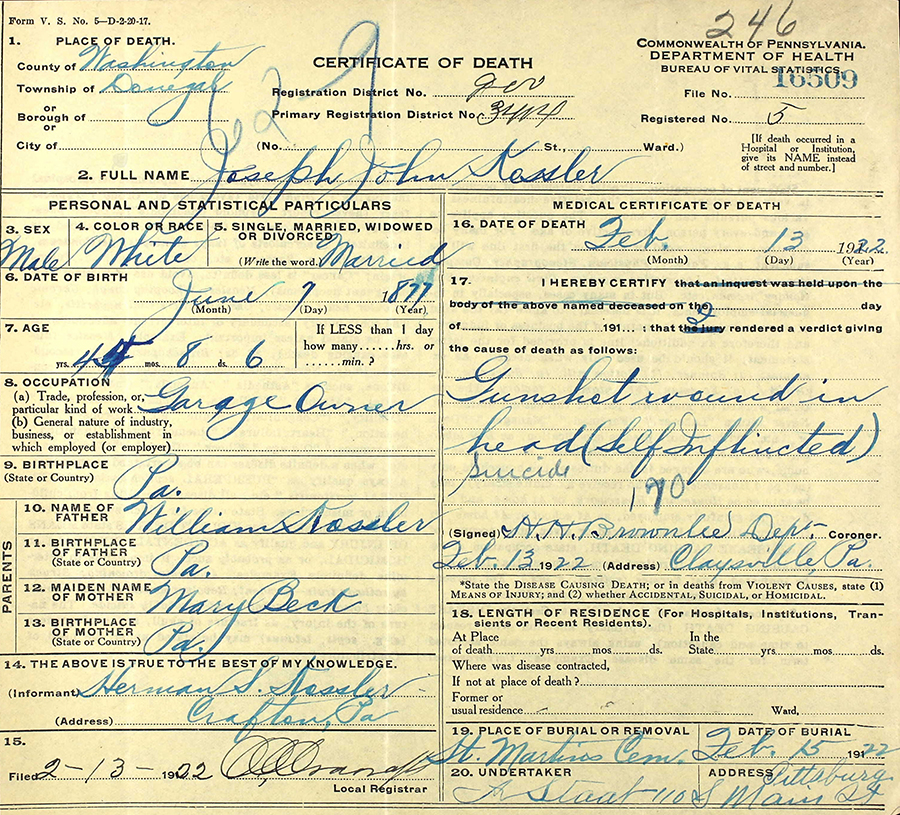
Joseph Kossler was a successful West End truck manufacturer and automobile dealer. He was a pillar in the community — or so everyone thought until he was found dead in his car from a gunshot wound to the head in February 1922. Adolph Hertig, a farmer who lived in West Alexander, Washington County, found Kossler’s car and body in a lane leading to a neighbor’s home. Kossler’s family was adamant that someone had killed him. They even hired an outside investigator after officials intimated that Kossler’s death would be ruled a suicide. Ultimately, that’s what the Washington County Coroner listed in Kossler’s death certificate as the cause of death: “Gunshot wound in head (self-inflicted).” The coroner emphasized his finding on the next line, “Suicide.”

If Joseph Kossler didn’t kill himself, who did? Was it one of his many creditors? Was it the family of a young girl Kossler hit and injured in a car accident? An angry customer? Or, could it have been the bootleggers who used Kossler’s commercial garage to store their booze? Any one of these scenarios offers a plausible alternative to suicide.

So, who was Joseph Kessler and how did he end up dead along a rural road about 12 miles west of Washington, Pa.?

Joseph Kossler’s death certificate. Ancestry.com.
Continue reading

Down at the Hotel Pope

August Pope was born in Germany in 1857 and by the 1880s he was living in Pittsburgh working as a laborer. In the 1890s, he went into the grocery business and owned a store on Woods Run Avenue in Manchester (now, part of Pittsburgh’s North Side). On March 5, 1898, Pope’s eight-year-old son Henry lost one leg and the other was seriously injured in a streetcar accident near the family’s store. The accident devastated the Popes. August closed the grocery and went to work in a steel mill while pursuing more than a decade of litigation against the streetcar company.

Pope ultimately secured a hefty cash judgement and he put part of the money into a trust for his son and used another part to buy a West End saloon business formerly owned by Jonathan and Edward Hay. The Hay Hotel and saloon was a family business. In 1900, the U.S. Census documented Jonathan as the hotel’s proprietor with sons Harry, Bert, and Edward working as bartenders.

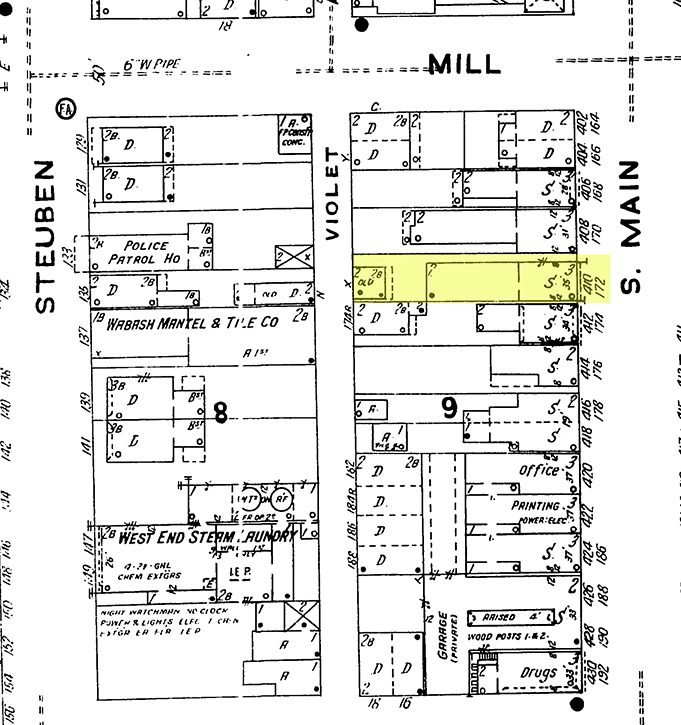
172 S. Main Street, West End. Sanborn fire insurance map published in 1924.
Continue reading

Did the Pittsburgh mob have two patents?

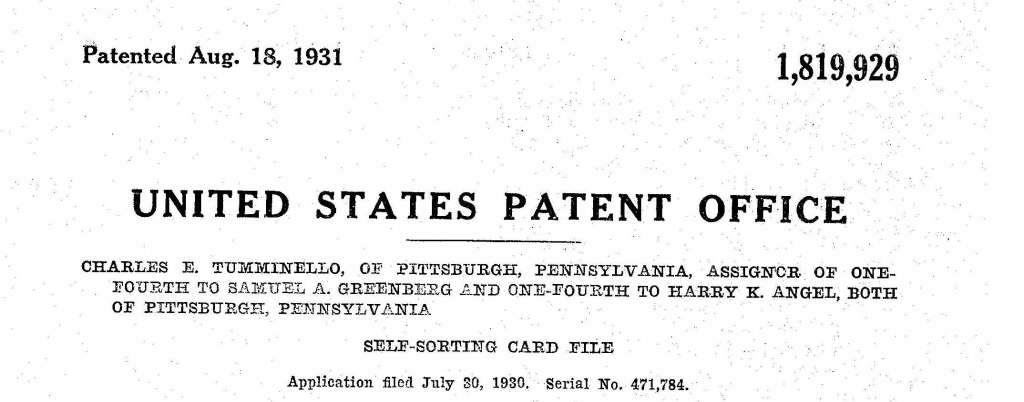
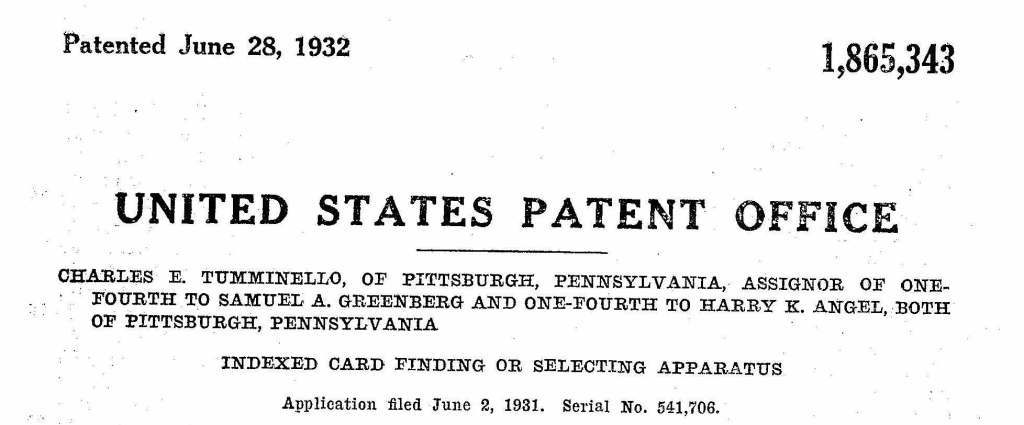
Charles Tumminello (1899-1982) came to Pittsburgh from Villarosa, Sicily, and settled in the North Side. He became an accountant and built a stable, successful life free from any (known) entanglements with law enforcement. Yet, in the summer of 1930 he filed the paperwork for the first of two patents for “card sorting” machines. There’s nothing unlawful in that simple clerical exercise.

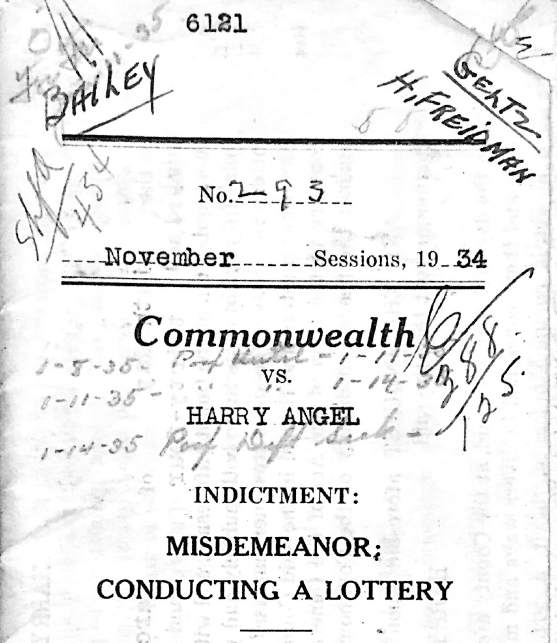
What’s curious, though, are two of the people he named as “assignees” in the patents: gambling entrepreneurs Harry “Kid” Angel and Sam Greenberg. Greenberg didn’t leave much of a paper trail during his gambling career. Kid Angel, however, was a pioneer and almost a legend in Pittsburgh’s pantheon of notable racketeers. He cut his teeth running pool halls and gaming rooms in the Hill District, graduating to numbers gambling and sports books.

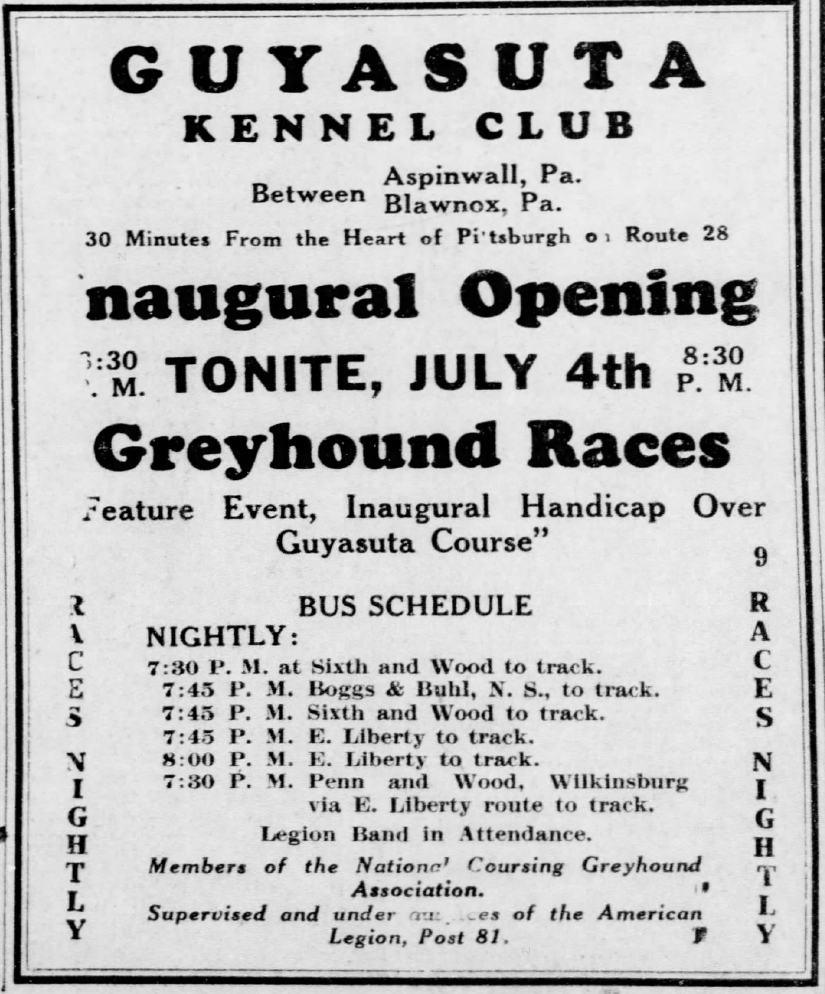
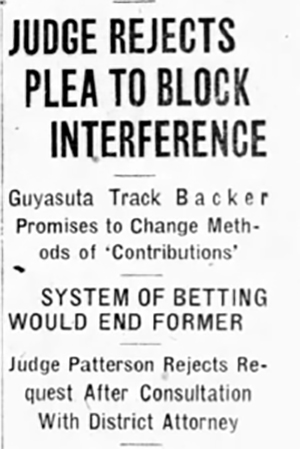
Tuminello filed the application for his first patent July 30, 1930. That was four weeks after Greenberg, Angel, Frank ‘Froy” Nathan, Phil Lange, et al. went into the dog track business in O’Hara Township. Their ill-fated Guyasuta Kennel Club made headlines throughout the month of July before the courts finally forced them to shut it down. I’m left scratching my head with this one question: why did Tuminello name Angel and Greenberg as assignees on his patents? That role is typically reserved for the people/entities employing the inventor ….

Pittsburgh Post-Gazette, July 4, 1930.
Pittsburgh Press, July 15, 1930.

© 2022 D.S. Rotenstein.