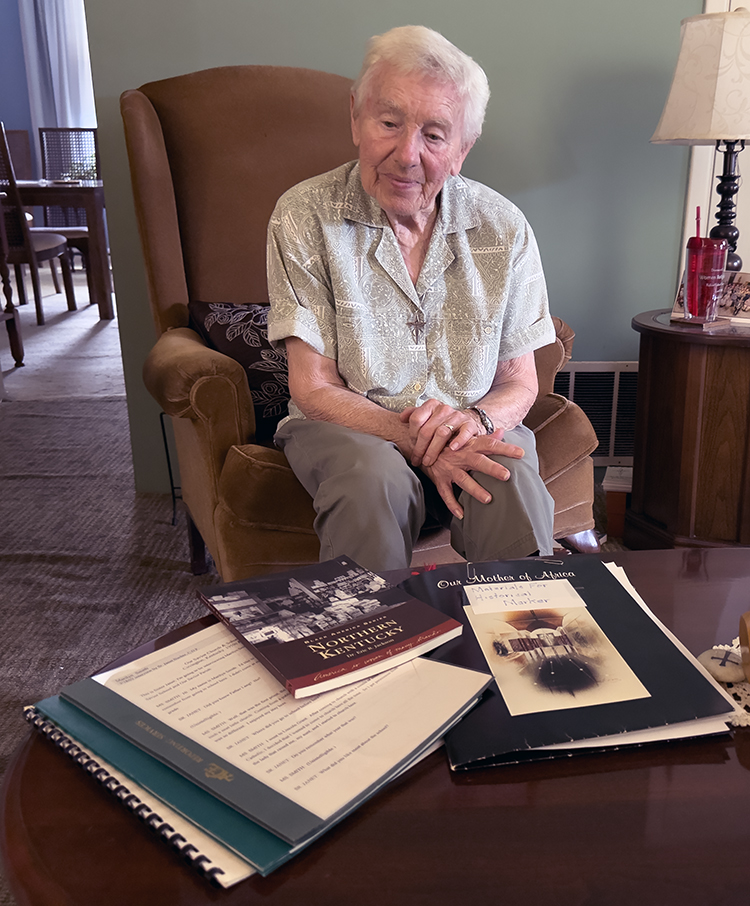
Sister Janet Bucher, July 2025. Photo by David Rotenstein.
Sister Janet Bucher was one of the first people I met after moving to Covington, Kentucky, last summer. Before the move, I had subscribed to City of Covington email lists promoting future events in our new home. A historical marker dedication caught my eye.
I attended the event at Covington’s Church of Our Savior and quickly switched from new resident mode into journalist and historian mode. During the event, I shot photos and interviewed key participants, including the powerhouse who initiated the marker project: Sister Janet Bucher. Later that day, I pitched a story to a local newsroom and it came out a few weeks later.
After Sister Janet retired, I wrote about her life and career in a second article.
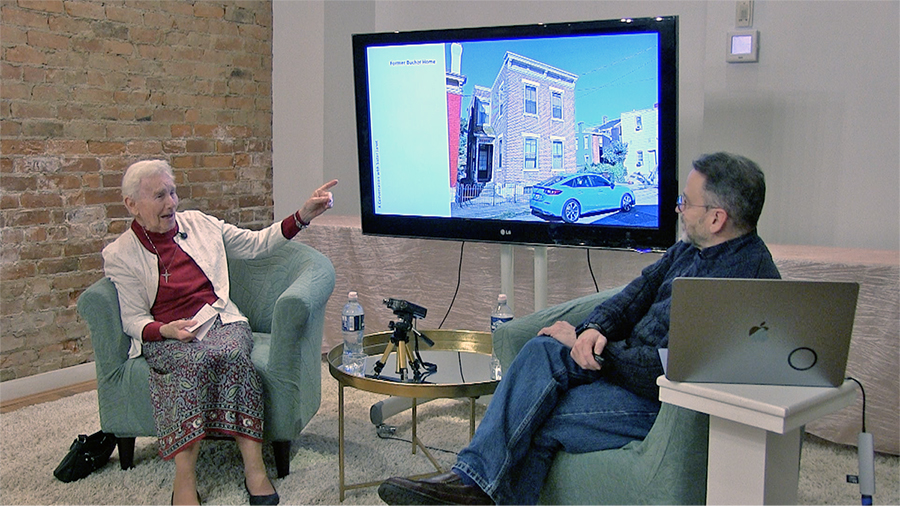
More interviews followed and it quickly became apparent that Sister Janet’s story is an important part of Covington’s history. I wanted to share the experiences beyond the printed page and I conceived a program that involved me interviewing Sister Janet before a live audience. The program took place Jan. 8 and it included the live interview, a brief slide show that illustrated her life in Covington and her career, and a discussion with the audience.
A Conversation with Sister Janet, Jan. 8, 2026.
The program is available on YouTube. Additional copies will be donated to the Kenton County Public Library’s Local History & Genealogy Department.
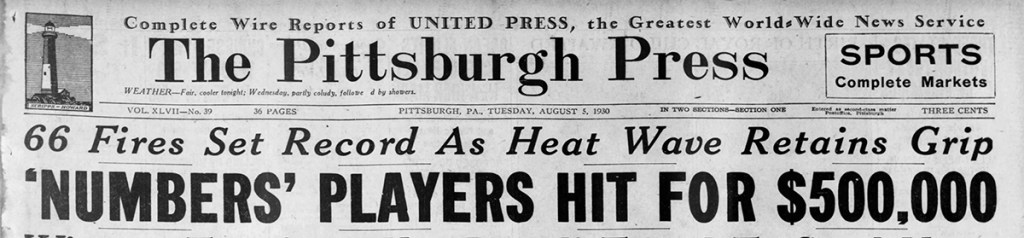
I don’t think I had ever heard of Covington and Newport until the fall of 2019. That’s when I began digging into the story behind one of Pittsburgh’s most memorable episodes in organized crime history. On August 5, 1930, it seemed like everyone placing a numbers bet in the Steel City picked 805 as their number.
Pittsburgh Press front page, August 5, 1930.
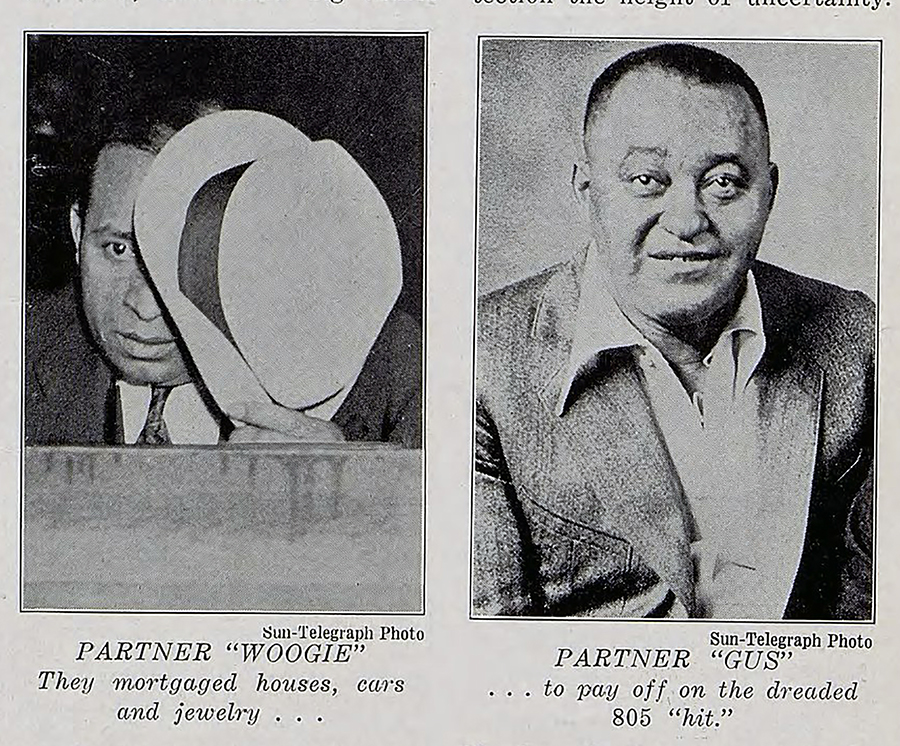
The resulting rush by numbers bankers to pay winners or get out of town because they couldn’t pay became entrenched in Pittsburgh’s true crime lore. It made legends of some numbers bankers who paid, like Gus Greenlee and Woogie Harris, and scoundrels out of others who didn’t, like Jake Lerner.
Pittsburgh Bulletin Index, Feb. 20, 1936.
Lerner’s name was a latecomer to the 805 story. In 1981, University of Pittsburgh history graduate student Rob Ruck interviewed an aging racketeer about the 805 episode.
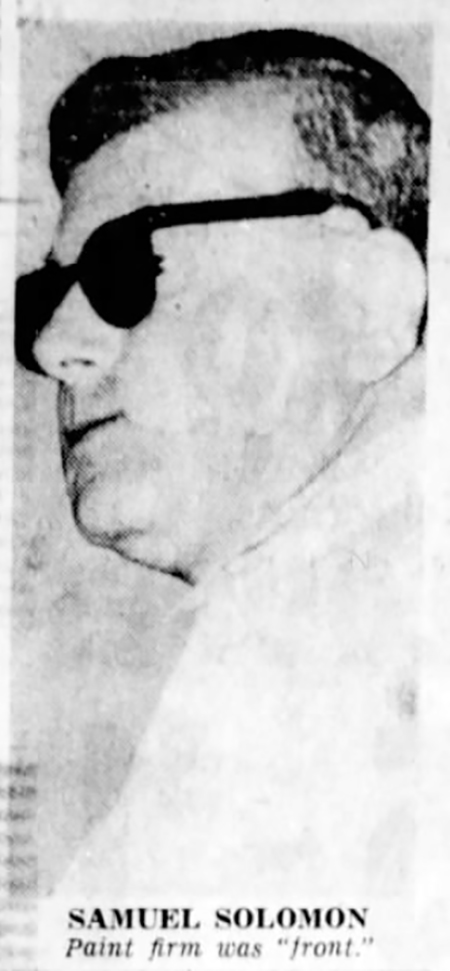
Pittsburgh Post-Gazette, Aug. 15, 1963.
“Did you ever hear of a number 805,” Ruck asked Sam Solomon.
Instead of directly answering Ruck’s question, Solomon replied with a rhyme: “805 was a burner. Where the hell is Jakie Lerner?”
Solomon’s quotation appeared in Ruck’s 1983 PhD dissertation and 1993 book, Sandlot Seasons: Sport in Black Pittsburgh. Since then, it’s been widely quoted.
Ruck moved on in the interview with Solomon and didn’t ask two key follow-up questions: Who was Jakie Lerner and why as Lerner important in the 805 story?
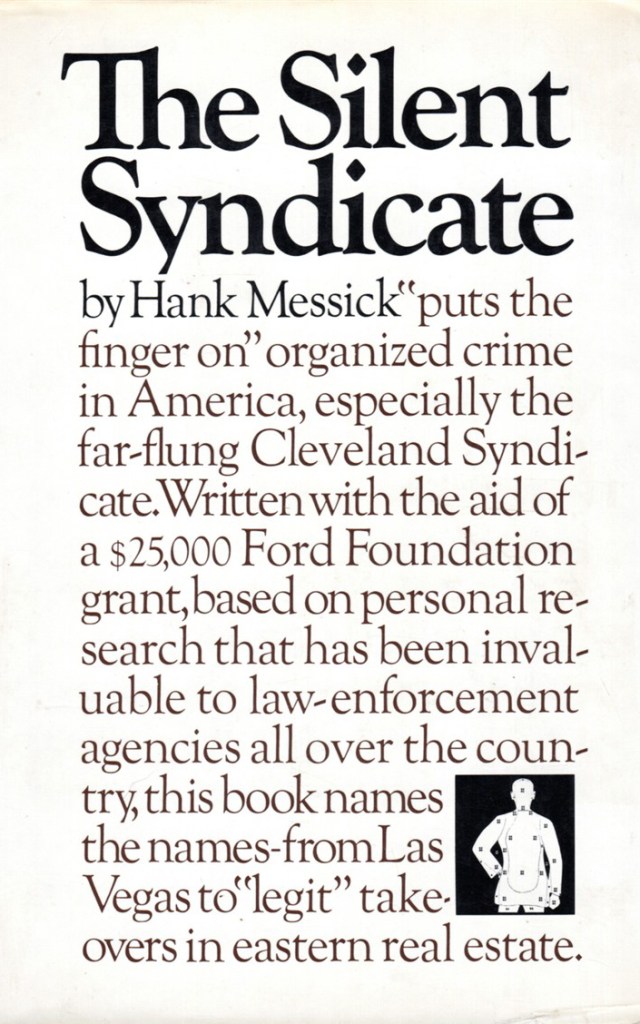
I went looking for Lerner’s story and found part of it in journalist Hank Messick’s 1967 book about Cleveland organized crime history, The Silent Syndicate. In the book, Messick told the story of Cleveland racketeers who transformed Northern Kentucky into a gambling mecca.
Messick made a career out of the Cleveland syndicate and their activities, from Northern Kentucky to Southern Florida and Las Vegas.
By 1950, Covington and Newport had joined Hot Springs, Arkansas, and a handful of other American small cities where gambling, bootlegging, and prostitution comprised the biggest slice of the local economic pie.
Messick’s Silent Syndicate came up among the top results in my first internet searches using Jake Lerner’s name.
Messick had tied Lerner, who started his crime career in Pittsburgh in the 1920s, to Tucson-based gambling via wire services. Sam “Gameboy” Miller was Lerner’s connection to Northern Kentucky. In the 1930s, Miller had been dispatched by the Cleveland syndicate to run the Lookout House casino which was located just outside of Covington.
Lerner had settled down in Tucson in 1943 to run a numbers gambling and money laundering operation for Pittsburgh racketeers. The FBI wrote in 1945 that Pittsburgh racketeers had stopped going to Hot Springs and instead were visiting Lerner’s Tucson ranch.
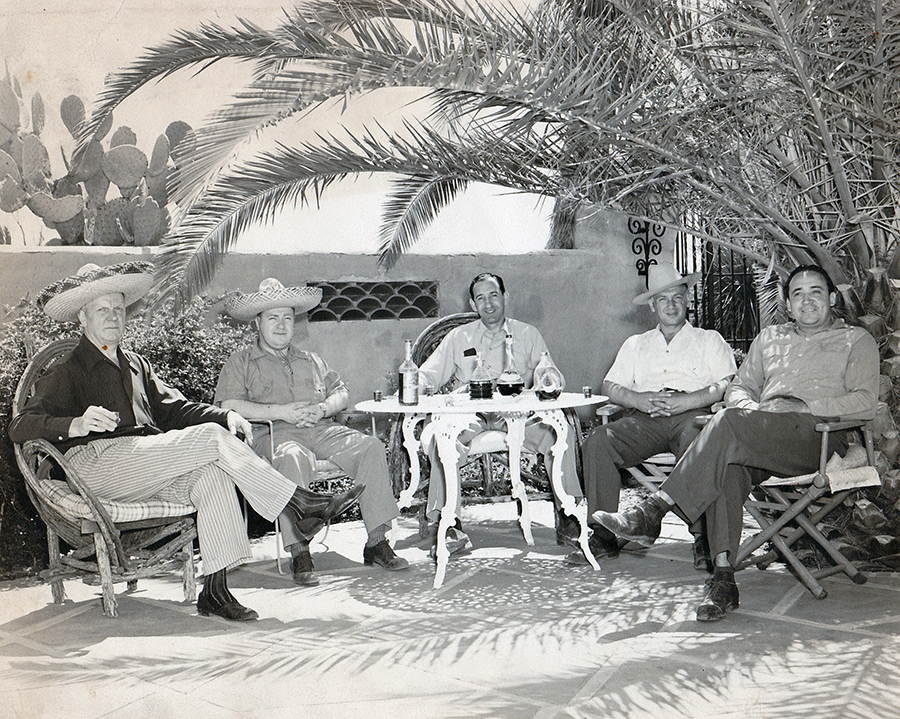
Jake Lerner (second from right) and friends at his Tucson ranch in the late 1940s.
“Gameboy made his headquarters at the Santa Rita Hotel in Tucson. Assisting him was Jacob Lerner of Pittsburgh,” Messick wrote in Silent Syndicate. “Lerner had been associated with the syndicate in a dog track at Steubenville, Ohio, and he fronted for Miller in Tucson.”
I bought a copy of Silent Syndicate and most of Messick’s other books about organized crime. My first article about Lerner and gambling appeared in a Pittsburgh magazine in 2020. By June of 2021, I was leading organized crime history walking tours in Pittsburgh.
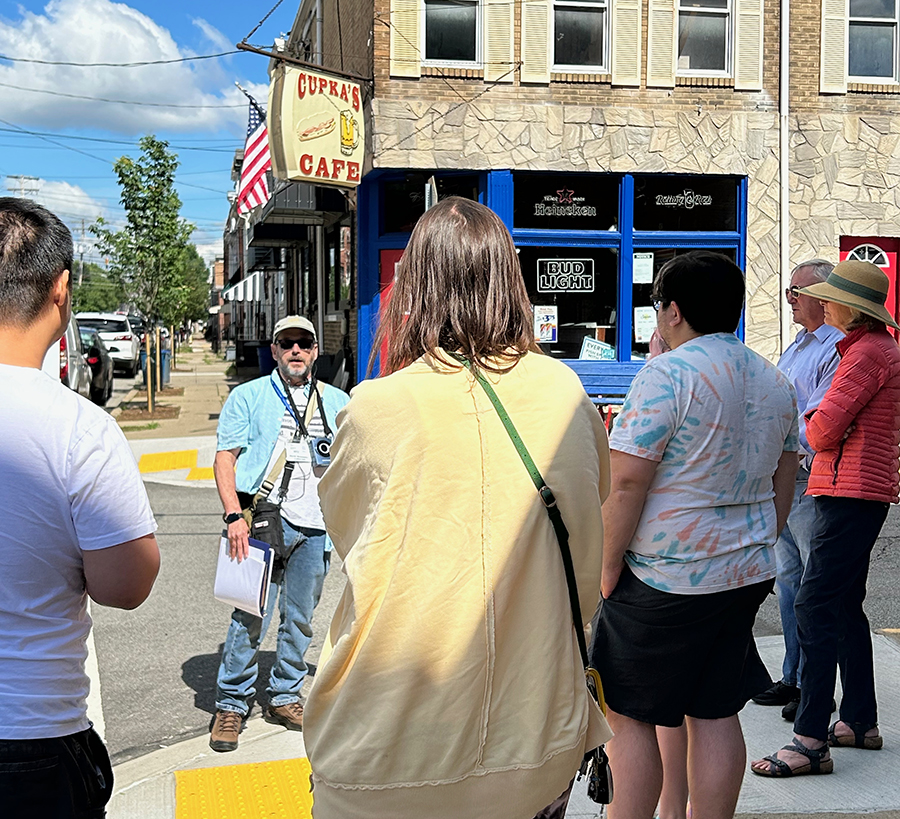
South Side by the Numbers walking tour, Pittsburgh 2024.
Curious about Northern Kentucky’s rackets history, in 2024 I booked a spot on one of Newport’s popular gangster tours. It didn’t take long for me to fall in love with the region. Less than a year later, we moved from Pittsburgh to Covington, swapping one Ohio River city for another.
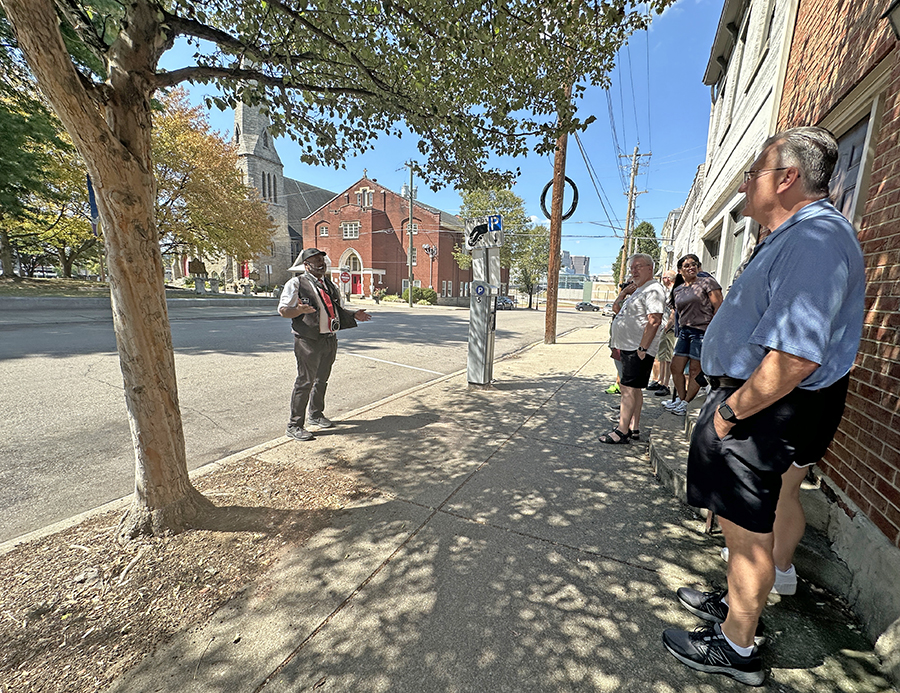
Newport gangster tour, Sept. 2024.
COVertNKY is Steel City Vice rebranded. Follow us on Bluesky, YouTube, and here for new stories about lots of Northern Kentucky and Cincinnati topics, including, of course, organized crime. Sign up for email announcements for Covington walking and bike tours starting in the Spring of 2026 [coming soon].
As you get to know COVertNKY, you can either blame or thank Hank Messick for its arrival.
For much of the twentieth century, numbers gambling defined much of the Hill District’s economic and social landscapes. The street lottery immortalized in August Wilson’s plays and Hill District oral traditions arrived in Pittsburgh in the early 1920s. Within a decade it had spread from Hill District barber shops, pool halls, and newsstands to every corner of the city. It spawned legends and it financed the rise of the city’s rich entertainment and sports industries.
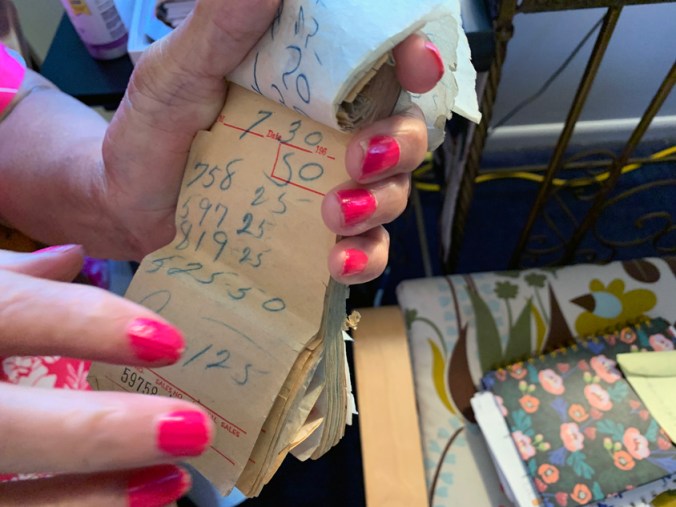
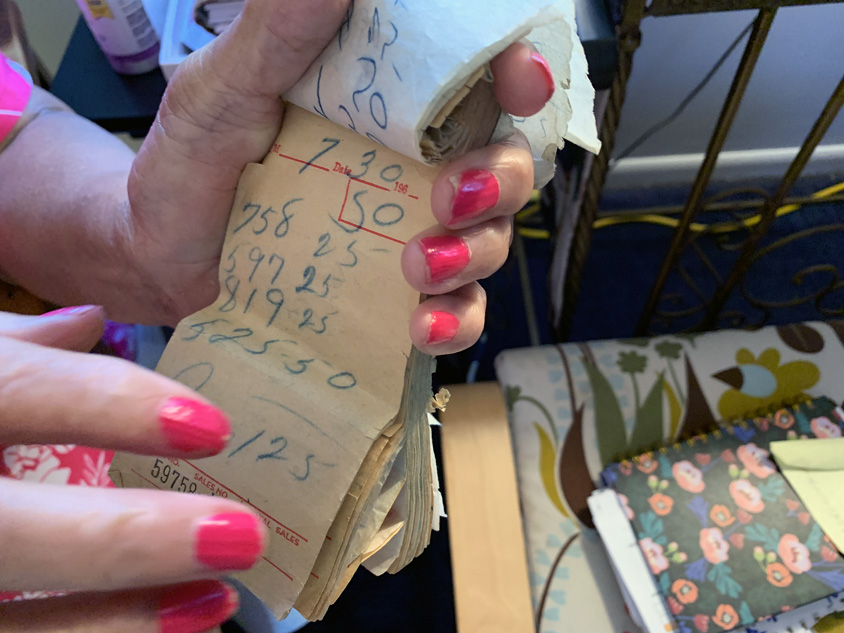
Numbers book used in the Hill District during the early 1960s.
Informal lotteries thrived in Black communities since at least the 1860s. The most popular, known as policy, evolved from betting on the outcomes of official state lotteries. Later gambling entrepreneurs opened betting parlors where people could bet on combinations of digits on buttons or balls drawn from burlap bags and wire cages. Pittsburgh newspapers began reporting on policy rings here during the 1870s.
Policy, however, was easy to rig and cheating was rampant. Thus, Harlem numbers racketeers developed a system for calculating the number that players believed was incorruptible, i.e., it couldn’t be fixed like earlier street lotteries. Instead of being drawn from a container, the daily number was based on a known figure published in the financial pages of daily newspapers – popular choices included the volume of shares traded on the New York Stock Exchange, or the daily balance of the U.S. Treasury. Bettors played the game by simply selecting a three-digit number and paying a penny, nickel, or dime to a bookie called a “runner” who recorded the the number on a slip of paper. Because the daily number was unpredictable and publicly-known, consumer confidence and participation soared.
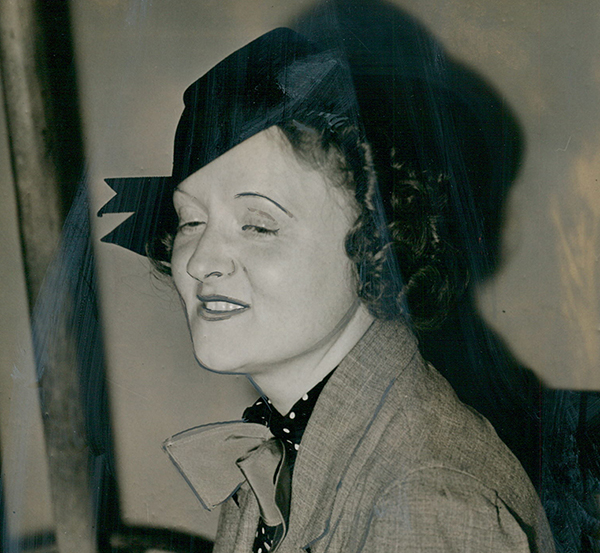
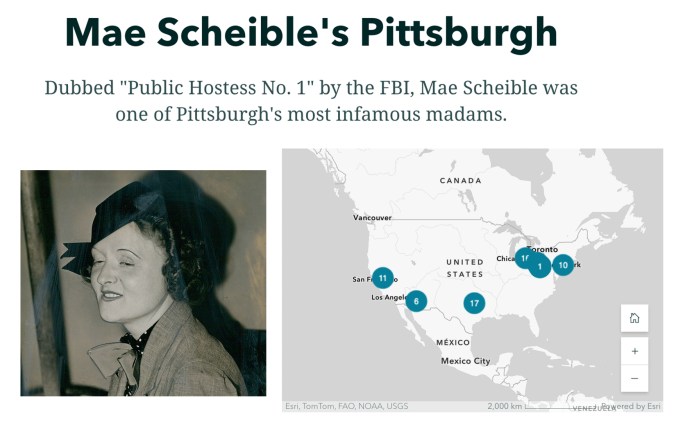
While researching a feature story on the history of brothels and sex work in Pittsburgh, I tried to wrap my head around Mae Scheible’s incredible story. Her name appears in several overviews of vice history in Pittsburgh. Yet, her story (and place in local and national history) has been eclipsed by legends attached to another well-known Pittsburgh madam, Nettie Gordon.
As I dug deeper into Scheible’s story, I realized there was a lot more to her than the existing published record. Researching someone like Scheible is a challenge: to say that she had a fraught relationship with the truth would be an understatement.
The article about brothels appeared in NEXTpittsburgh on August 29, 2024. While working on the article, I began building a storymap to better illustrate Scheible’s long career and colorful life. The storymap’s first draft is now live. It’s going to take some more time to follow additional leads and update it (and likely correct it) with new information as I collect it from remote locations throughout the United States.
Willie Sutton was one of America’s best known bank robbers. Between the 1920s and 1950s, Sutton grabbed headlines by pulling off daring robberies and audacious jailbreaks. He became infamous for things that he did and things simply attributed to him, including the answer he allegedly gave when asked why he robbed banks.
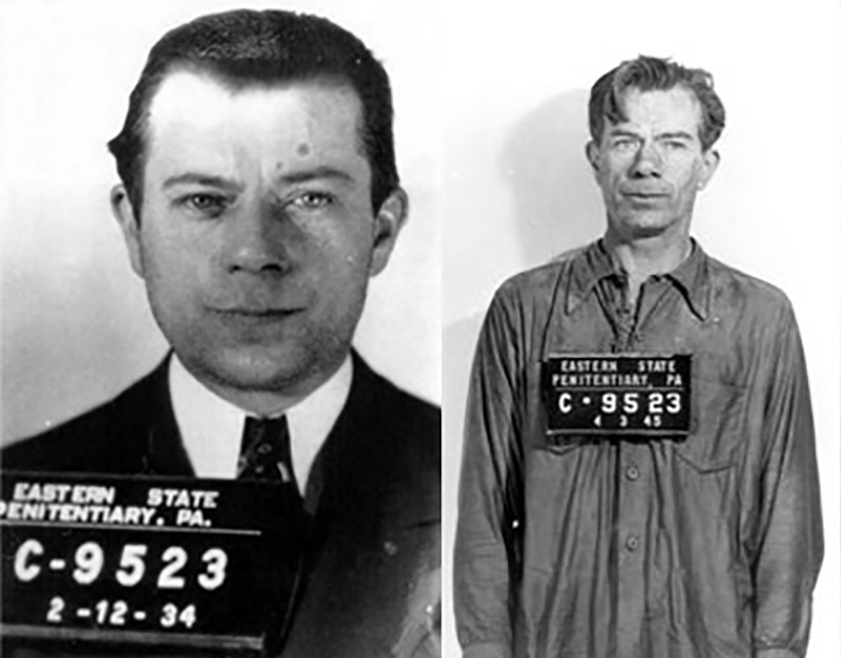
Willie Sutton mugshots taken in 1934 and 1945 while he was imprisoned at Philadelphia’s Eastern State Penitentiary.
“Because that’s where the money is,” journalist Mitch Ohnstad said he answered. He denied the answer many times and offered his own reason: because it was fun.
Sutton spent most of his criminal career in New York City and the Philadelphia area. Briefly in late 1933, Sutton paid a visit to Southwestern Pennsylvania. On the run from the police in Philadelphia, he and a woman drove to Braddock. After Sutton’s capture in early 1934, newspapers around the nation told the story. Sutton himself recounted it in his 1976 autobiography, Where the Money Was.
Braddock was a steel town a few miles out of Pittsburgh. The dirtiest, smokiest city I have ever seen. The whole town lived off the Carnegie plant. One immense steel mill and a bunch of small wooden houses begrimed with soot. It was never light, there was too much smoke in the air, and it was never dark because those open-hearth furnaces would light up the skies at night.
Rev. William R. Pankey delivered his most memorable sermon on Sunday March 8, 1937. It was a cold late winter morning, but his message was on fire. The Baptist preacher had lots to work with: gambling, booze, and a new Mae West film (Klondike Annie). Whether by design or chance, Pankey’s words ended up being published in newspapers locally and around the nation.
Pankey had was in his fifth year preaching at Pittsburgh’s Union Baptist Church. It was a new church formed by the combination of two old congregations. The towering brick church was completed in the 1920s. Pankey came to Pittsburgh from Chester, Pa., when was called to serve in 1931.
Zion Christian Church (former Union Baptist Church), Brownsville and Hornaday roads, Pittsburgh. Photo by David S. Rotenstein.
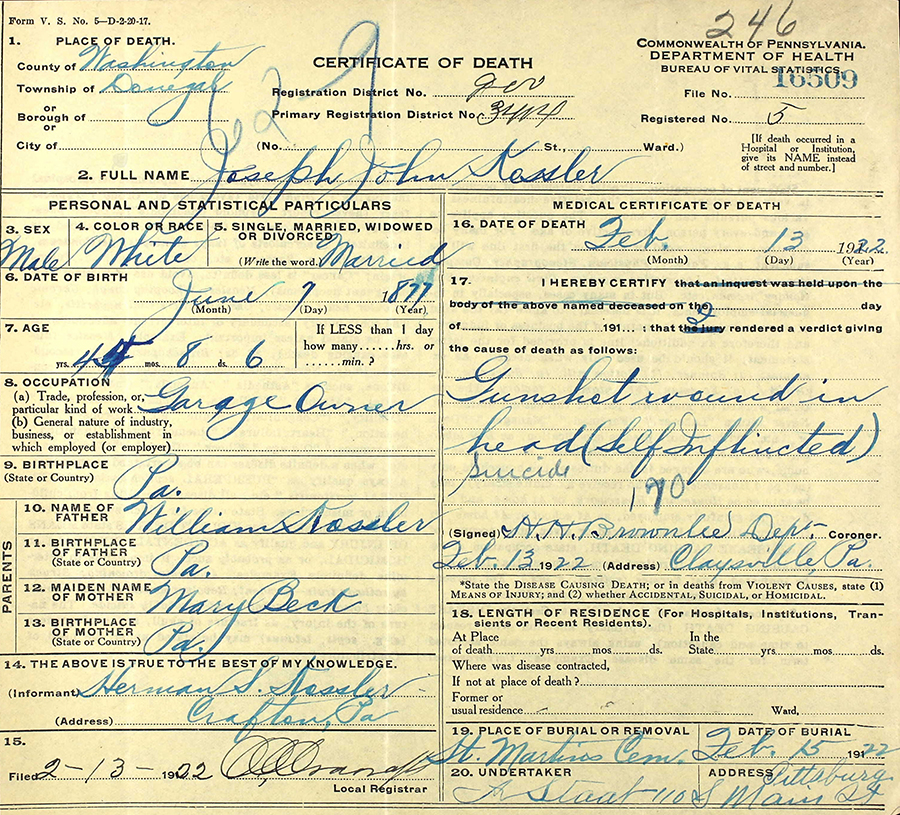
Joseph Kossler was a successful West End truck manufacturer and automobile dealer. He was a pillar in the community — or so everyone thought until he was found dead in his car from a gunshot wound to the head in February 1922. Adolph Hertig, a farmer who lived in West Alexander, Washington County, found Kossler’s car and body in a lane leading to a neighbor’s home. Kossler’s family was adamant that someone had killed him. They even hired an outside investigator after officials intimated that Kossler’s death would be ruled a suicide. Ultimately, that’s what the Washington County Coroner listed in Kossler’s death certificate as the cause of death: “Gunshot wound in head (self-inflicted).” The coroner emphasized his finding on the next line, “Suicide.”
If Joseph Kossler didn’t kill himself, who did? Was it one of his many creditors? Was it the family of a young girl Kossler hit and injured in a car accident? An angry customer? Or, could it have been the bootleggers who used Kossler’s commercial garage to store their booze? Any one of these scenarios offers a plausible alternative to suicide.
So, who was Joseph Kessler and how did he end up dead along a rural road about 12 miles west of Washington, Pa.?
August Pope was born in Germany in 1857 and by the 1880s he was living in Pittsburgh working as a laborer. In the 1890s, he went into the grocery business and owned a store on Woods Run Avenue in Manchester (now, part of Pittsburgh’s North Side). On March 5, 1898, Pope’s eight-year-old son Henry lost one leg and the other was seriously injured in a streetcar accident near the family’s store. The accident devastated the Popes. August closed the grocery and went to work in a steel mill while pursuing more than a decade of litigation against the streetcar company.
Pope ultimately secured a hefty cash judgement and he put part of the money into a trust for his son and used another part to buy a West End saloon business formerly owned by Jonathan and Edward Hay. The Hay Hotel and saloon was a family business. In 1900, the U.S. Census documented Jonathan as the hotel’s proprietor with sons Harry, Bert, and Edward working as bartenders.
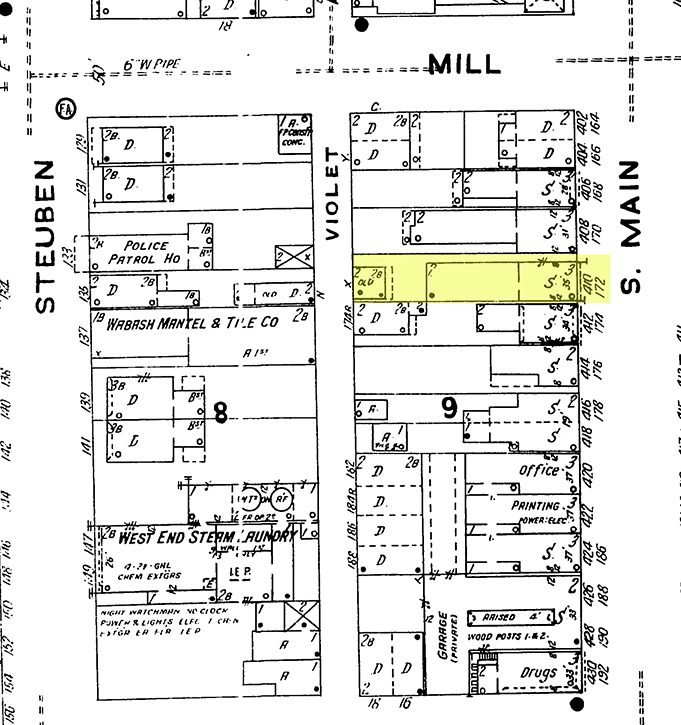
172 S. Main Street, West End. Sanborn fire insurance map published in 1924.
A shorter version of this article originally appeared in the Fall 2022 edition of the Reporter Dispatch, the newsletter of the Allegheny City Society.
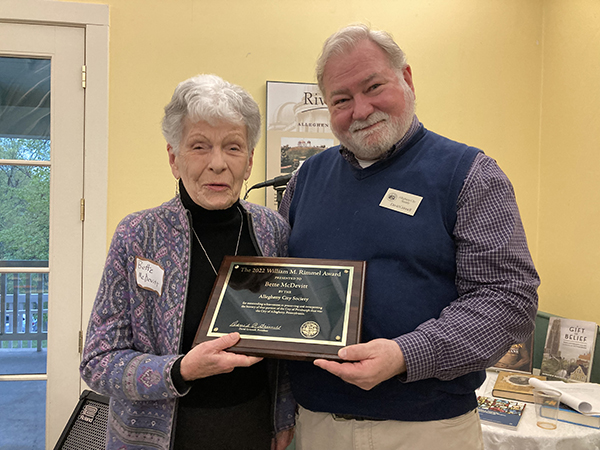
Pittsburgh writer and North Side resident Bette McDevitt received the 2022 William Rimmel Award. Bette writes about Pittsburgh history and her “Neighborhood Stories” columns appear in the Sen. John Heinz History Center magazine, Western Pennsylvania History. Though Bette grew up in New Castle, her family has deep ties to the North Side.
Bette McDevitt and Allegheny City Society President David Grinnell with her 2022 William Rimmel Award plaque. Photo by Tom Wilson.
At the May 4 annual meeting, Allegheny City Society President David Grinnell introduced Bette. David explained how he first met her while he worked as an archivist for History Center predecessor, the Historical Society of Western Pennsylvania. Just before the awards ceremony, David reinforced the meeting’s theme, storytelling, by inviting attendees to pick a theme from cards placed on each of the tables inside Riverview Park’s Chapel Shelter. Each person then was asked to tell a story related to a theme.
Bette’s story at her table and in her Rimmel Award acceptance speech drew from memories of Pittsburgh’s once rich numbers gambling culture. Numbers is an informal and illegal daily street lottery that arrived in Pittsburgh in the 1920s. It was an African American invention introduced in Harlem in the years just after the turn of the twentieth century. The game relied on a three-digit number derived from daily financial market returns published in daily newspapers. If bettors picked the correct three-digit number, they could convert a nickel into $30 and a dime into $60 — much more than the average pay for many Pittsburgh residents.
The numbers racket supported a large ecosystem of racketeers — runners, writers, and bankers — as well as people who owned the front businesses that doubled as numbers stations: barbershops, cigar stores, and pool rooms. These folks handled the racket’s supply side; housewives, millworkers, and city employees comprised a large pool of potential winners looking for just one big “hit.”
The North Side had its share of infamous numbers bankers, including Jack Cancelliere (who owned the longtime mob hangout, the Rosa Villa restaurant at East General Robinson and Sandusky Street) and Phil Lange whose exploits including backing the ill-fated Guyasuta Kennel Club in O’Hara Township the summer of 1930. And, Art Rooney — a close Lange partner and friend — was the biggest gambling boss of them all with gambling joints and speakeasies in several North Side locations.
Bette’s family wasn’t part of that crowd.
At the May meeting, Bette recounted a summertime visit during the 1940s to her aunts and grandmother, who lived in a house on Brighton Place. Bette was about 12 years old at the time. She described being handed some coins wrapped in paper with a note instructing the numbers writer down the street how to play the bet.
“Three women, plus my grandmother, who was an important person there — they all played the numbers,” Bette recalled in a subsequent telephone interview. “They all played the numbers and in the morning when they woke up, they got the dream book out to see which numbers they should play.”
Bette remembered taking the bet to a Charles Street store. Bette’s Aunt Jen usually took the daily bet. “One day, she told me that I could do that and be the runner,” she said.
Like many Pittsburgh families, numbers was an important part of daily life in Bette’s family’s household. Her aunts and grandmother lived in an apartment above a barbershop run by a man named Henry. “He used to come up the steps every day to the apartment and stand on the top step and he would ask, ‘What was the number today?’”
Playing the numbers was just another daily routine, like cooking dinner, grocery shopping, or picking up the mail. After we spoke, Bette dug into her family records and came up with some letters written by her grandmother. She quoted one to me in a May 2022 email. “Doris was lucky on the numbers,” Bette’s grandmother wrote about her other granddaughter, Bette’s sister. The letter, signed “Mum,” continued,
Called me on Monday play 108 ten cents a day. It came up the same day. So she told me to keep the 4 dollars. I sent her the fifty dollars. So the next week she called again play 315 ten cents a day came up the second day she played it. Sent her fifty dollars again. Irene had it too. Won two days straight. Doris said she figured out when her baby would be born it was 315. I buy a treasury ticket every week. If you have the whole five numbers you win eleven hundred dollars. I play every day. So it came out in the paper 26632. I had 20632 I got 5 dollars for the last three numbers. Sometime I may get it. Doris sure cleaned up. Got the ten-cent jackpot. Ed got the 5 cent one. Mother 60 dollars on the crap. Poor Dad nothing. Rose Mary is going to be operated on Sat. I’ll say good-by with love to both of you.
Though Bette only spent one week in the apartment that summer, the experience made an indelible mark in her memory. That memory is now part of a polished storytelling repertoire. Bette explained, “When I do tell people that, it seems so unlikely to them, you know, this white-haired old lady that was a messenger or whatever it’s called. It gets a great reaction from people because it’s out of character for me.”
Bette also credits those fond memories for influencing her move to the North Side. Like many good historical storytellers, Bette uses the built environment to teach people about the past in an entertaining way. “I moved here, to this neighborhood, probably because of all the good memories I have from being around here,” she confessed in our interview. “I can find family sites all over the Northside.”
Michelle Slater loves history. That’s a good thing because her family’s story is woven into Pittsburgh’s Hill District’s history about as tightly as one can get. Slater’s grandmother wrote numbers for some of the Steel City’s best known numbers bankers. Her father cut hair and eventually ran the Crystal Barbershop, one of the Hill’s most iconic third places and Black-owned businesses. Slater, 58, herself learned the hair trade watching her father and she eventually became a licensed barber herself. That’s right, not a hairstylist, a barber. One wall inside her shop is dedicated to telling her family and community’s stories. There’s a lot to unpack inside Slater’s shop and her stories.
I met Slater while researching the social history of numbers gambling in Pittsburgh. Her father, Harold Slater (1924-2014), had cut the hair of a gregarious and well-loved numbers banker and nightclub owner, George “Crip” Barron (1924-2001). On Saturdays, Barron spent time with Angela James, whom he treated like a daughter. Barron would drop Angela off at the Hurricane bar next door to the Crystal Barbershop where she would drink Shirley Temples while he tended to busines and to his hair. After I interviewed Angela James for the first time in January 2021, she connected me to Michelle Slater.
Before I get into Slater’s story, it’s important to underscore the significance of the two intersecting traditions that dominate it: numbers gambling and barbering. Invented in Harlem in the first decades of the twentieth century, numbers gambling was a street lottery that formed the economic engine sustaining many twentieth century urban, rural, and suburban Black communities. The game enabled multitudes of small bettors to wager pennies, nickels, dimes, and quarters on three-digit numbers derived from financial market returns published in daily newspapers.
With payoffs at 600-to-one, a big hit could yield anything from a dinner out to a down payment on a house. That’s how the late Colin Powell’s family bought its first home. Most gamblers, however, weren’t lucky and many found themselves betting money that otherwise would have gone towards rent and food. Numbers played off a dream of Black freedom and prosperity with long roots in this nation dating back at least to carpenter Denmark Vesey’s 1799 lottery win that enabled him to buy his freedom in South Carolina.
Dolores Slater holds her mother’s last numbers book. The final entries were made in the summer of 1960s, shortly before Louise Harris died. Photo by David S. Rotenstein.


 COVert NKY