Covington’s alleys are historic hidden treasures

Covington has some spectacular historic architecture. There’s lots to choose from for fans of Victorian houses, stylish commercial buildings, and historic cemeteries. Plus, there’s a John A. Roebling suspension bridge spanning the Ohio River. But it’s the city’s alleys that many architectural historians, preservationists, and urban planners find alluring. Once hidden and utilitarian, Covington’s ancient alleys are becoming relevant as new generations of residents and planners discover them.

“They have a certain aesthetic appeal,” said planner Christian Huelsman, founder of Cincinnati’s Spring in Our Steps, about Covington’s alleys. “They’re certainly appealing from a transportation perspective because they provide an alternative that’s away from busy streets.”

Covington is one of many American and Canadian cities where founders designed transportation grids with streets and alleys. They are found in Philadelphia, Pittsburgh, Cincinnati, and Toronto — all 18th century cities with alleys delineated in their original plans.

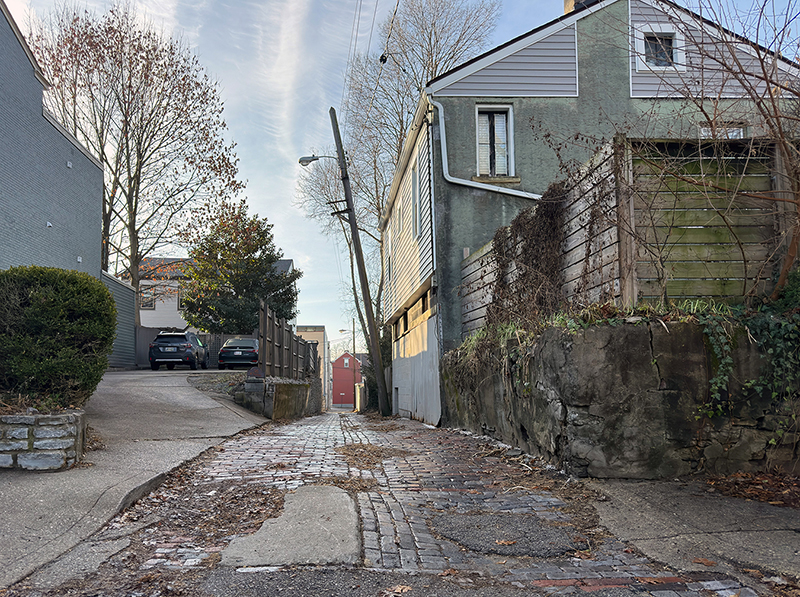
Many Covington alleys still have original brick pavements and drains. Photo by David Rotenstein.

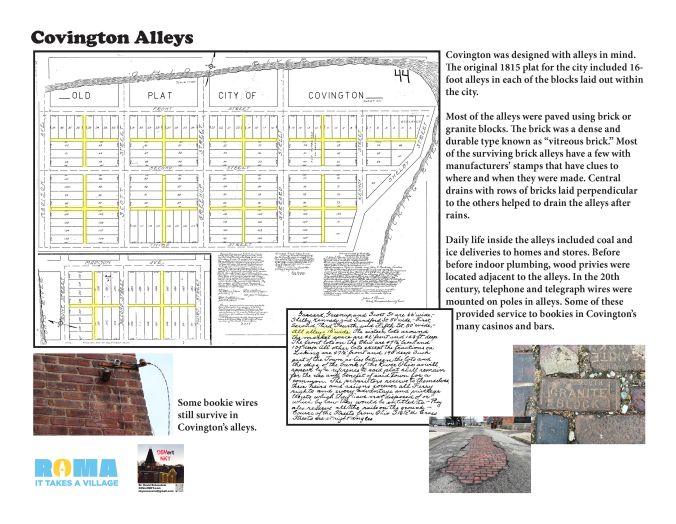
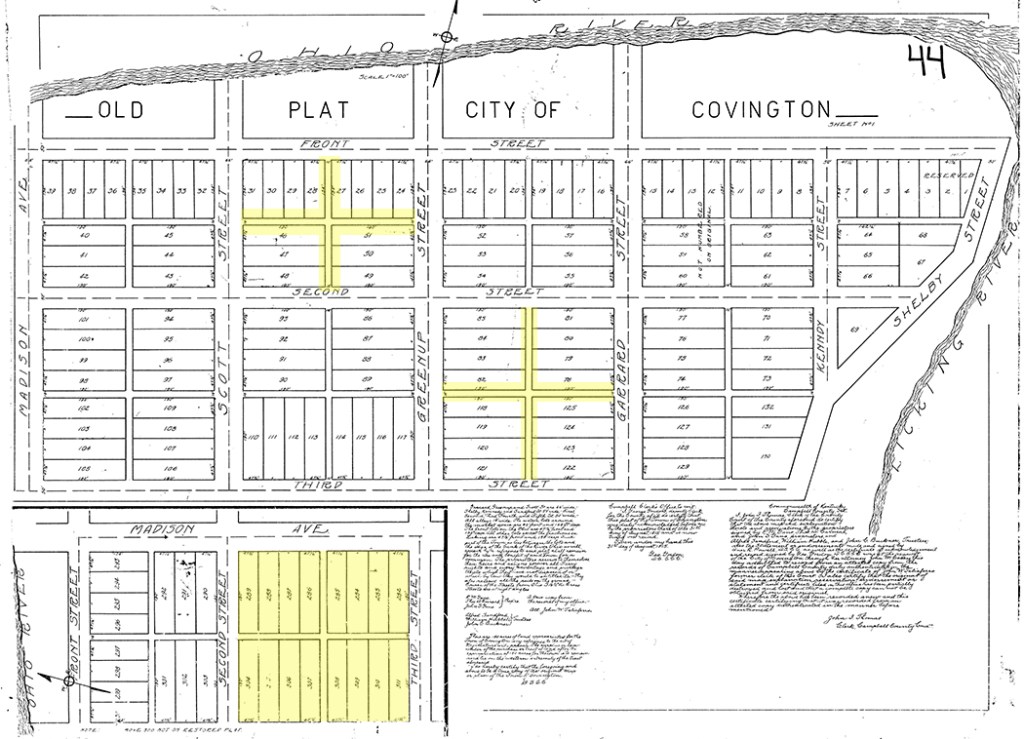
Founded in 1815, Covington’s original plan included streets that were 66- and 50-feet wide and blocks divided by 16-foot alleys. They were the spaces where privies were hidden and where coal and ice were delivered to homes and businesses.

Original 1815 plat of Covington showing street grid and planned alleys (examples highlighted). Kenton County land records.
Continue reading

Industrial history provides the backdrop for a Covington site’s next chapter

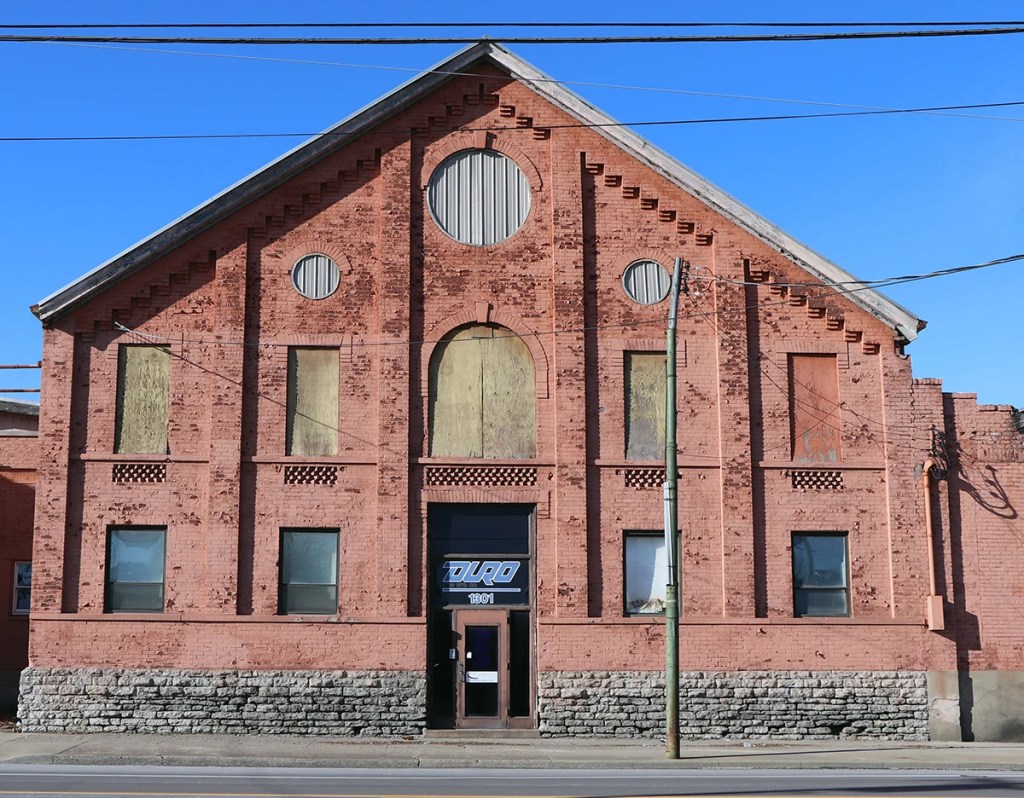
Former Duro bag site, 2026. Photo by David S. Rotenstein.

Earlier this year, the City of Covington, Kentucky, announced that a long-derelict industrial site would be making a comeback. The city, along with the Northern Kentucky Port Authority and Kenton County, announced plans for a former C&O Railroad roundhouse that had been used for more than half a century as a paper bag manufacturing plant. Hidden beneath the industrial patina are more than 150 years of industrial history.

First used in the mid-19th century as a railroad repair facility and offices, the site became a production facility for one of the nation’s biggest shopping bag manufacturers. It also became the setting for prolonged labor disputes before ending up an abandoned relic filled with stories and toxic substances accumulated throughout its history.

The Railroad Years

In the 1850s, Covington became the northern terminus for the Covington and Lexington Railroad. Ninety-nine miles of track connected Lexington to Covington by the time the route was completed in 1854.

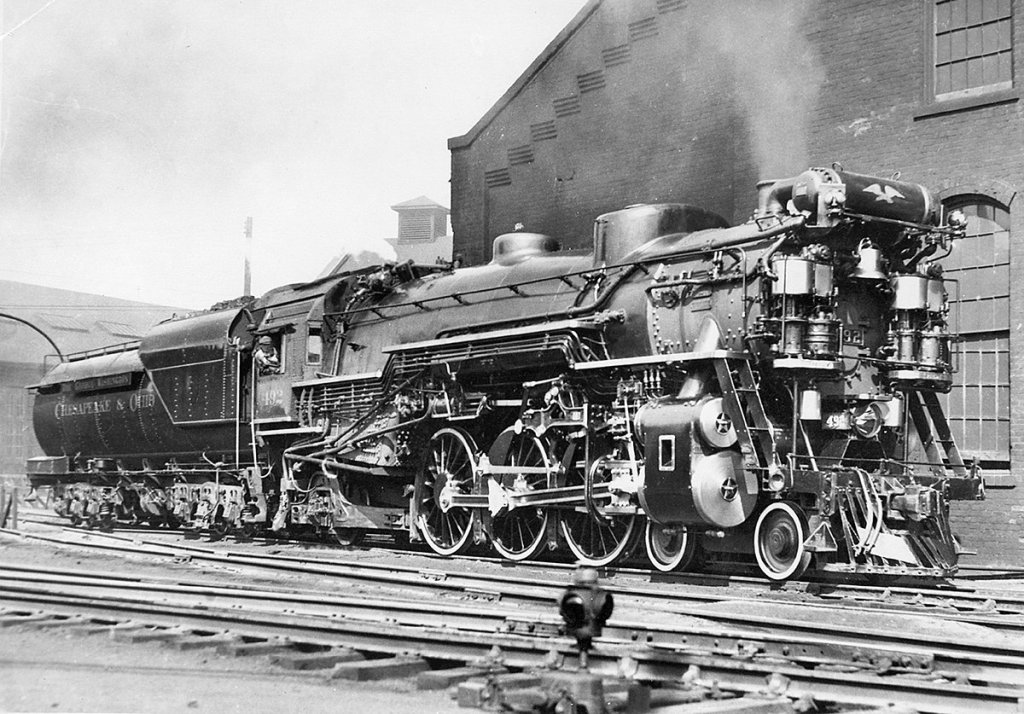
C&O Railroad engine parked on tracks outside of the Covington roundhouse. Photo courtesy of Chesapeake & Ohio Historical Society.

Passengers and freight not remaining in the city crossed the Ohio River into Cincinnati — originally by ferry and after 1867, via John Roebling’s suspension bridge and later railroad bridges.

Continue reading

Lagering caves, Underground Railroad station, or a flooded parking lot? A Covington mystery

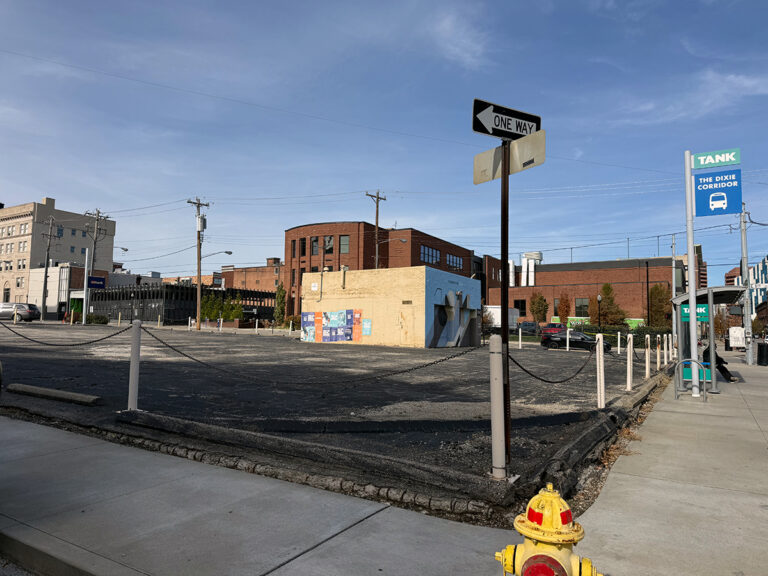
There is a flooded parking garage beneath this surface parking lot at the intersection of Scott and Pike streets in Covington. The Pure Oil Company built the concrete block service station in 1941. Photo by David Rotenstein.

Each fall, Jill Morenz leads two-hour walking tours of downtown Covington, Kentucky, highlighting some of the city’s best- and least-known ghost stories. As she walks by the surface parking lot at the intersection of Pike and Scott streets, she casually mentions that the property — prime downtown real estate — has been vacant for a long time, partly because of a hidden and flooded space beneath the asphalt.

“There’s tunnels under there,” Morenz said in an interview after one of her 2025 tours. “You just walk across the parking lot and you’re like, oh, I wonder why nobody’s put anything here.”

The parking lot fits well into Morenz’s tour: it’s haunted by the ghosts of an old brewery and a failed hotel project.

She recalled when she first learned about some of the property’s history. Morenz, who now runs Aviatra Accelerators, was working for the Catalytic Fund. The lender, in turn, was working with a developer who wanted to build a condominium building on the site and there was one big stumbling block.

“[They] couldn’t get approval, and then it suddenly became clear why, because it’s just not stable enough to support anything big on there,” Morenz explained.

Morenz and others familiar with the site and its history of abandoned development bids tend to chalk up its longevity as dead space to the flooded cavern beneath the parking lot and the costs involved to deal with it.

Continue reading

Stevie’s roadhouse was a popular Cincy area destination with an enduring legacy

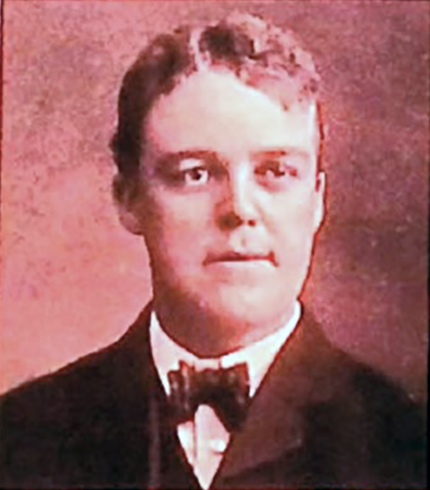
Roadhouse owner Joe Stevie. Courtesy Bob and Joe Stevie.

Covington, Kentucky, may be one of the few places in the country where an ordinary conversation about a vacant downtown parking lot seamlessly segues into a discussion about bootlegging and gambling. That’s what happened earlier this year when developer Joe Stevie was describing the history of a lot at the corner of Scott and Pike streets.

“My great-great-uncle Joe owned a place called Stevie’s Roadhouse,” Stevie said in a January interview in his Covington office. “It was across the street from the Greyhound Grill in Fort Mitchell.”

Then Stevie’s story got really interesting. “So Joseph Stevie was shot by people coming to rob him. He was shot in his stomach [and] survived,” the contemporary Joe Stevie said.

Northern Kentucky’s Long History of Roadhouses

Stevie’s roadhouse was one of many roadhouses that sprang up around Covington and Newport in the years bracketing the turn of the 20th century. Located along highways leading into the cities, roadhouses began as places where travelers could find lodging, food, intoxicating beverages and maybe some entertainment.

Continue reading

A conversation with Sister Janet

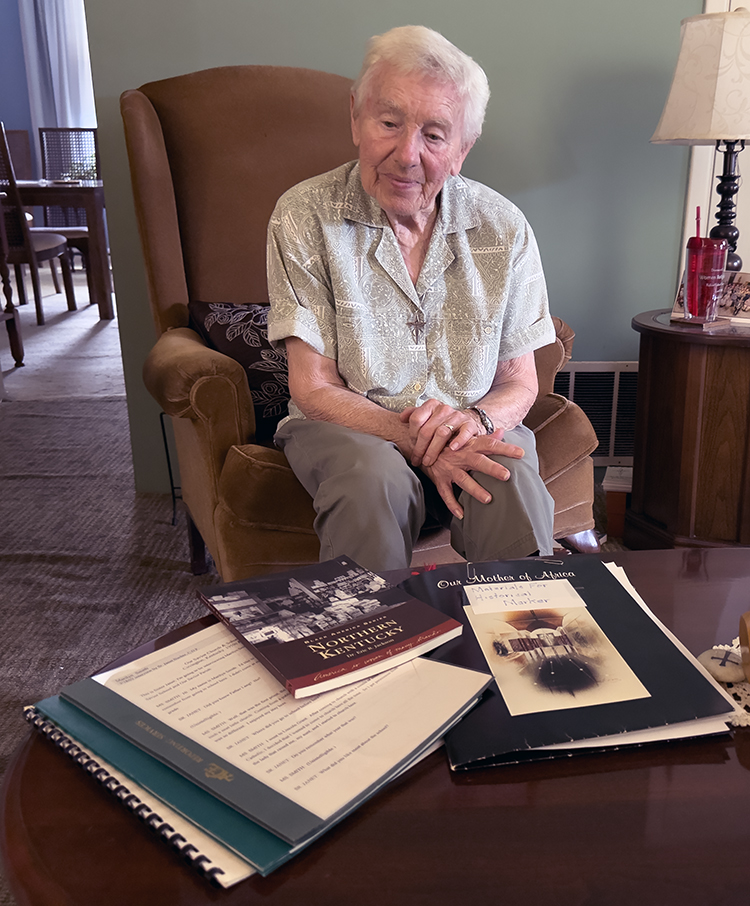
Sister Janet Bucher, July 2025. Photo by David Rotenstein.

Sister Janet Bucher was one of the first people I met after moving to Covington, Kentucky, last summer. Before the move, I had subscribed to City of Covington email lists promoting future events in our new home. A historical marker dedication caught my eye.

I attended the event at Covington’s Church of Our Savior and quickly switched from new resident mode into journalist and historian mode. During the event, I shot photos and interviewed key participants, including the powerhouse who initiated the marker project: Sister Janet Bucher. Later that day, I pitched a story to a local newsroom and it came out a few weeks later.

After Sister Janet retired, I wrote about her life and career in a second article.

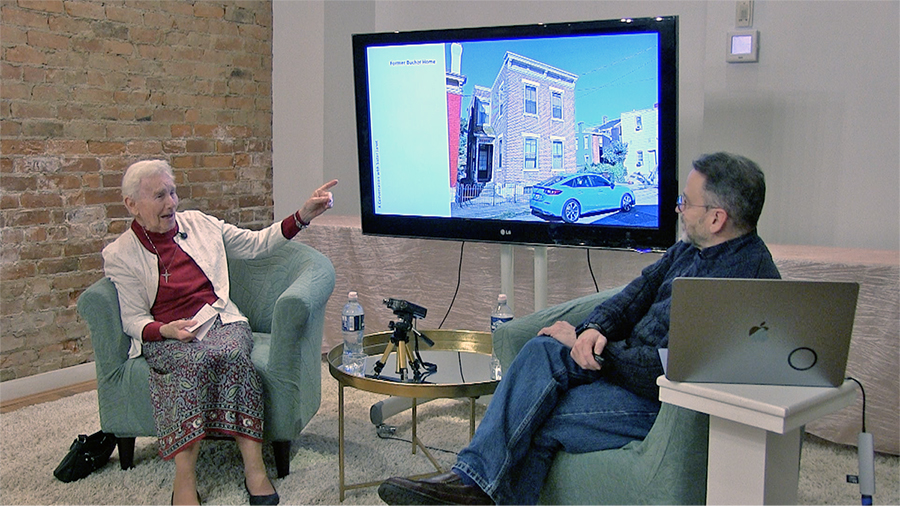
More interviews followed and it quickly became apparent that Sister Janet’s story is an important part of Covington’s history. I wanted to share the experiences beyond the printed page and I conceived a program that involved me interviewing Sister Janet before a live audience. The program took place Jan. 8 and it included the live interview, a brief slide show that illustrated her life in Covington and her career, and a discussion with the audience.

A Conversation with Sister Janet, Jan. 8, 2026.

The program is available on YouTube. Additional copies will be donated to the Kenton County Public Library’s Local History & Genealogy Department.